 Z&Z STROTEC
Green Manufacturing & ISO 14955 Energy-Efficient CNC
綠色製造與 ISO 14955 節能工具機 · 친환경 제조와 ISO 14955 에너지 효율 CNC
View interactive version · 完整互動版 · 인터랙티브 버전 →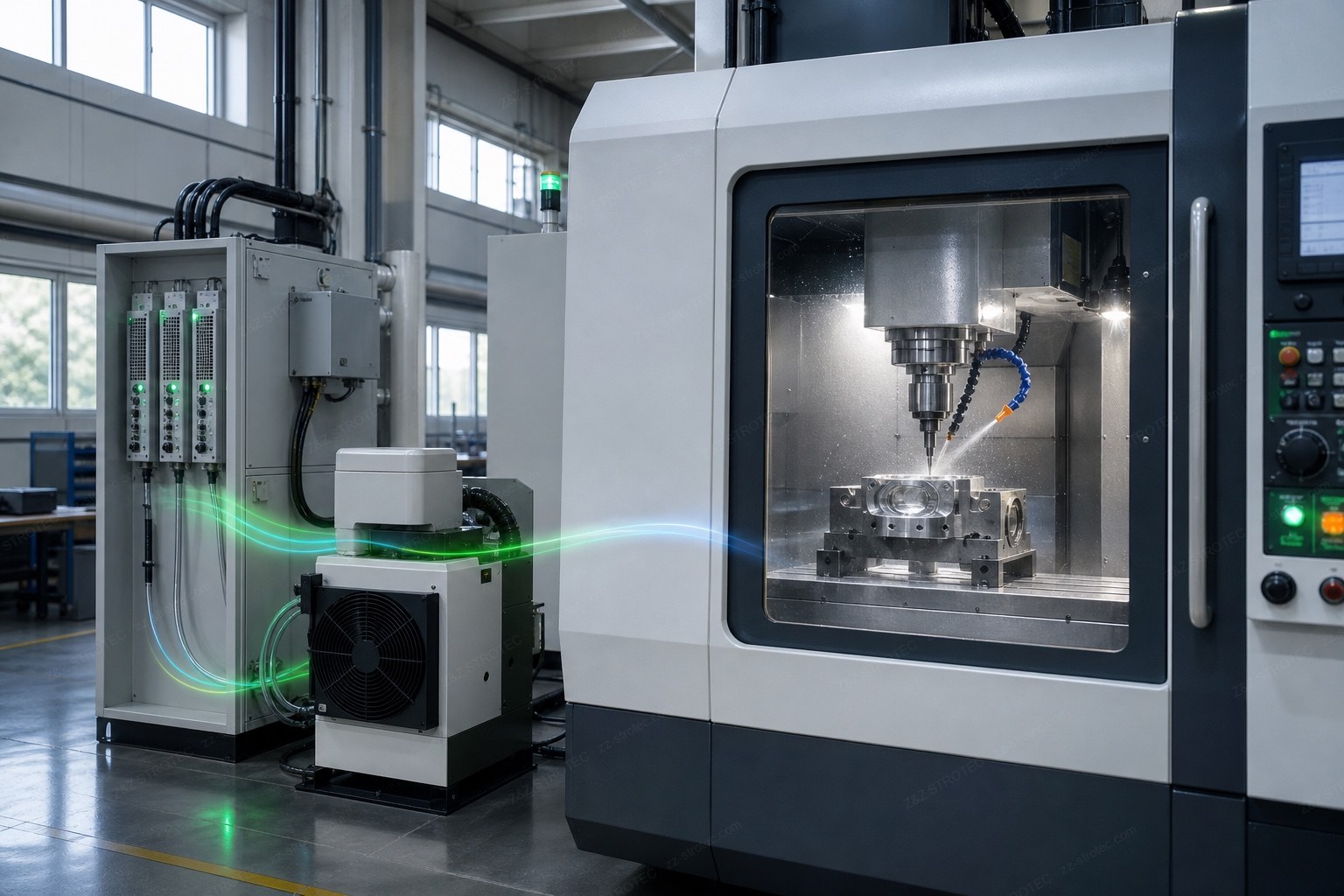
Why machining energy is the priority
Life Cycle Assessment (LCA) studies of machine tools consistently find that the large majority of a machine's lifetime environmental impact comes from its operational (use) phase — the electricity consumed while cutting — rather than from its manufacture or disposal. Cutting energy use during machining is therefore the most effective sustainability lever for an end-user factory.
Representative illustration: most of a machine tool's carbon footprint occurs in the use phase; the actual split varies by machine, lifetime and usage intensity.
What is ISO 14955?
ISO 14955 is an international standard series for the environmental evaluation of machine tools. It builds energy-efficient design into the machine itself:
- ISO 14955-1: design methodology for energy-efficient machine tools.
- ISO 14955-2: methods for measuring the energy supplied to a machine and its components.
The goal is to optimise drive units, electrical systems and auxiliary components (hydraulics, cooling) without sacrificing precision.
Key eco-design technologies
- High-efficiency drives & inverter control: auxiliary motors such as coolant pumps and fans rated to IE3/IE4 efficiency classes, with inverter control that matches flow to the real-time cutting load.
- Smart standby modes: non-essential systems (chip conveyors, high-pressure pumps) power down automatically during idle periods to cut standby waste.
- Minimum Quantity Lubrication (MQL): a precise air–oil mist replaces flood coolant, reducing fluid consumption and environmental load.
These echo the principles of international eco-design frameworks such as the EU Ecodesign Directive (2009/125/EC).
Taiwan's green certifications — two separate schemes
Two industry bodies run parallel, voluntary certifications. They are often confused, so it helps to keep them distinct:
- Green Machinery Mark (TAMI, Taiwan Association of Machinery Industry): a system-level eco-design review covering the full life cycle, aligned with ISO 14955 (energy-efficient design) and ISO 14064 / ISO 14067 (carbon inventory and product carbon footprint). It is not tied to a single energy-saving percentage.
- Machine Tool Energy-Saving Label (TMBA, Taiwan Machine Tool & Accessory Builders' Association): a graded label based on measured energy use against a baseline machine under ISO 14955-1/-2. Silver requires a measured saving of 10% or more; Gold requires 15% or more.
Note: the commonly cited "1% annual energy saving" is not a label threshold — it is the statutory obligation on large energy users under Taiwan's Energy Management Act. Choosing certified low-carbon machines helps a factory meet that obligation and reduce future carbon-fee exposure.
CBAM, Green Machining and Your Sourcing Strategy
How CBAM and carbon cost flow down the supply chain, and the shift from low-cost to low-carbon sourcing.
Basic materials (steel, aluminium) are directly in scope; finished parts feel the cost through their inputs and customer requirements.
Demand ISO 14067 carbon data and favour high-efficiency equipment to cut both TCO and embedded carbon.
為何加工能耗是優先重點
工具機的生命週期評估(LCA)研究普遍指出,機台一生的環境衝擊絕大部分來自使用(運轉)階段——也就是切削時耗用的電力——而非製造或報廢階段。因此,降低加工過程的能耗,是終端工廠提升永續表現最有效的施力點。
示意圖:碳排放絕大部分發生於使用階段;實際比例依機型、壽命與使用強度而異。
什麼是 ISO 14955?
ISO 14955 是針對工具機環境評估的國際標準系列,核心是把節能設計納入機台本身:
- ISO 14955-1:工具機節能設計方法。
- ISO 14955-2:機台與其元件能耗的量測方法。
目標是在不犧牲精度的前提下,優化驅動單元、電氣系統與油壓、冷卻等輔助元件的耗能。
核心生態化設計技術
- 高效率驅動與變頻控制:冷卻泵、風扇等輔助馬達採 IE3/IE4 高效率等級,並以變頻控制依實際切削負載調整流量。
- 智慧待機節能:閒置時自動降載或關閉非必要系統(如排屑機、高壓泵),減少待機浪費。
- 微量潤滑(MQL):以精準油氣霧化取代傳統淹覆式切削液,降低切削液用量與環境負荷。
這些做法呼應歐盟生態化設計指令(2009/125/EC)等國際規範的精神。
台灣的綠色認證——兩套不同制度
台灣有兩大產業公會各自推動平行、自願性的認證,兩者常被混淆,宜分清楚:
- 綠色機械標章(臺灣機械工業同業公會 TAMI):系統性的生態設計審查,涵蓋完整生命週期,對接 ISO 14955(節能設計)與 ISO 14064/ISO 14067(碳盤查與產品碳足跡),並非綁定單一節能百分比。
- 工具機產業節能標章(台灣工具機暨零組件工業同業公會 TMBA):依 ISO 14955-1/-2,將機台與基準機進行能耗實測比對的分級標章。銀質須達實測節能 10% 以上、金質須達 15% 以上。
說明:常被引用的「年節能 1%」並非標章門檻,而是《能源管理法》對製造業大用戶的法定義務。採購通過認證的低碳機台,有助工廠達成此義務並降低未來碳費負擔。
CBAM 時代:綠色加工與你的採購策略
歐盟 CBAM 與碳成本如何沿供應鏈傳導,以及從低成本走向低碳採購的轉變。
直接列管的是鋼、鋁等基礎材料;成品零件則透過材料與客戶要求間接承壓。
要求 ISO 14067 碳數據、改用高效率設備,同時壓低 TCO 與嵌入碳。
가공 에너지가 우선순위인 이유
공작기계의 전과정평가(LCA) 연구는 기계의 생애 환경 영향 대부분이 제조나 폐기 단계가 아니라 운전(사용) 단계 — 절삭 중 소비되는 전력 — 에서 발생한다고 일관되게 보여줍니다. 따라서 가공 중 에너지 소비를 줄이는 것이 최종 사용자 공장의 지속가능성을 높이는 가장 효과적인 방법입니다.
참고용 도식: 탄소 배출의 대부분은 사용 단계에서 발생하며, 실제 비율은 기계·수명·사용 강도에 따라 다릅니다.
ISO 14955란?
ISO 14955는 공작기계의 환경 평가를 위한 국제 표준 시리즈로, 에너지 효율 설계를 기계 자체에 반영하는 것이 핵심입니다:
- ISO 14955-1: 에너지 효율적 공작기계 설계 방법론.
- ISO 14955-2: 기계 및 구성요소에 공급되는 에너지 측정 방법.
목표는 정밀도를 희생하지 않으면서 구동 유닛, 전기 시스템, 보조 요소(유압·냉각)의 에너지 소비를 최적화하는 것입니다.
핵심 친환경 설계 기술
- 고효율 구동 및 인버터 제어: 냉각 펌프·팬 등 보조 모터에 IE3/IE4 효율 등급을 적용하고, 인버터 제어로 실시간 절삭 부하에 맞춰 유량을 조절합니다.
- 스마트 대기 모드: 유휴 시 비필수 시스템(칩 컨베이어, 고압 펌프)을 자동으로 정지해 대기 손실을 줄입니다.
- 최소량 윤활(MQL): 정밀한 오일-에어 미스트로 침지식 절삭유를 대체해 유체 소비와 환경 부하를 줄입니다.
이는 EU 에코디자인 지침(2009/125/EC) 등 국제 친환경 설계 체계의 원칙과 부합합니다.
대만의 친환경 인증 — 두 가지 별도 제도
두 산업 협회가 각각 병행하는 자발적 인증을 운영하며, 자주 혼동되므로 구분이 필요합니다:
- 그린 기계 마크(대만기계공업동업조합 TAMI): 전과정을 아우르는 시스템 차원의 친환경 설계 심사로, ISO 14955(에너지 효율 설계) 및 ISO 14064 / ISO 14067(탄소 인벤토리·제품 탄소발자국)과 연계됩니다. 단일 절감률에 묶이지 않습니다.
- 공작기계 산업 에너지절감 라벨(대만공작기계및부품공업동업조합 TMBA): ISO 14955-1/-2에 따라 기준 기계와 에너지 소비를 실측 비교하는 등급제 라벨입니다. 은장은 실측 절감 10% 이상, 금장은 15% 이상이 필요합니다.
참고: 흔히 인용되는 "연간 1% 에너지 절감"은 라벨 기준이 아니라 대만 에너지관리법상 대규모 에너지 사용자에 대한 법적 의무입니다. 인증된 저탄소 기계를 선택하면 공장이 이 의무를 달성하고 향후 탄소 부담금 노출을 줄이는 데 도움이 됩니다.
CBAM 길잡이: 친환경 가공과 소싱 전략
EU CBAM과 탄소 비용이 공급망을 따라 어떻게 전달되는지, 그리고 저비용에서 저탄소 소싱으로의 전환을 정리했습니다.
철강·알루미늄 등 기초 소재가 직접 대상이며, 완성 부품에는 비용이 간접적으로 전달됩니다.
ISO 14067 탄소 데이터 요구와 고효율 장비로 TCO와 내재 탄소를 함께 줄입니다.
장비 모델명, 부품 번호 또는 현장 사진을 보내주시면 공급 가능 여부와 가격을 회신드립니다.
Multi-brand selection rather than one factory, spec and compatibility checks in writing, a test cut and inspection at the plant before the machine ships, export documentation, and the same part number still available years later. Installation and after-sales in Korea, Brazil, Switzerland and Argentina run through local agents; for other markets we supply parts and components.
不綁單一工廠的多品牌選型、白紙黑字的規格與相容性確認、出貨前在工廠端試車驗機、出口文件,以及數年後仍拿得到的同一料號。韓國、巴西、瑞士、阿根廷的安裝與售後由在地服務商執行,其他市場我們供應零件與零組件。
단일 공장에 묶이지 않는 다중 브랜드 선정, 문서로 남기는 사양·호환성 확인, 선적 전 공장 시운전과 검사, 수출 서류, 그리고 수년 뒤에도 확보 가능한 동일 품번. 한국·브라질·스위스·아르헨티나의 설치와 애프터서비스는 현지 대리점이 담당하며, 그 외 시장에는 부품을 공급합니다.