 Z&Z STROTEC
Linear Guide & Rails
線性滑軌 · 리니어 가이드 & 레일
View interactive version · 完整互動版 · 인터랙티브 버전 →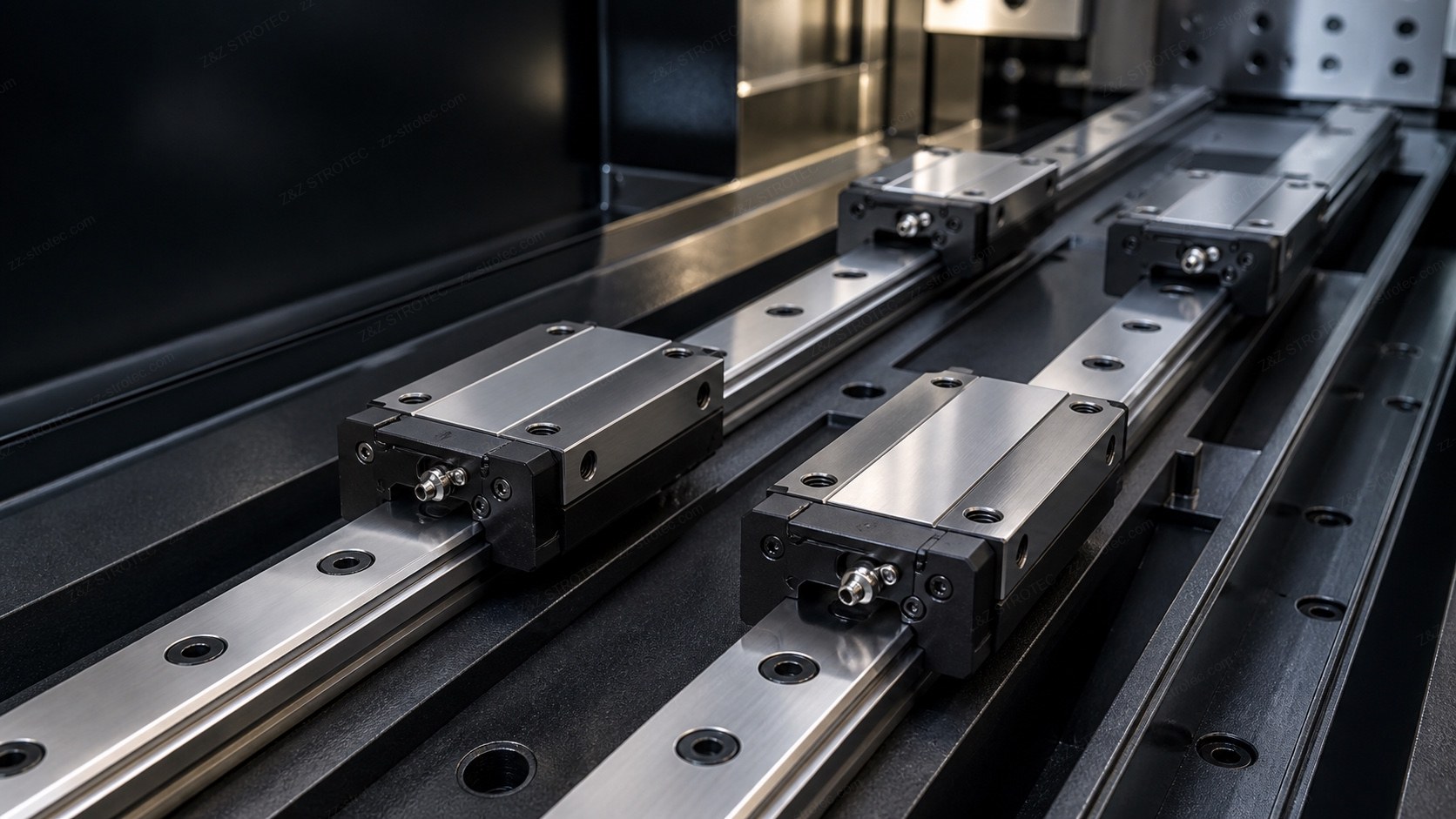
What is a Linear Guide?
A linear guide (線性滑軌) consists of a rail (導軌) and one or more carriages/blocks (滑塊) that allow precise linear motion with minimal friction. Used in all CNC machine axes.Key Specifications
- Size (model number): the figure in a designation such as 25 or 35 is the nominal size for that series, not a statement that the rail measures exactly 25 or 35 mm across. Take rail width, block height, mounting hole pitch and end distances from that brand's dimension table.
- Radial clearance / preload: the symbols are brand and series specific and do not carry from one catalogue to another. One common Japanese range labels them Normal clearance, C1 (light preload) and C0 (medium preload); a common Taiwanese range labels them Z0, ZA and ZB. Note that C1 is the lighter of the two, which is the opposite of what the numbering suggests. More preload means higher rigidity and less displacement, but also more sliding resistance and more load on the raceways, so specifying beyond what the axis needs costs life. Maker selection guidance generally puts machining centres, NC lathes and other heavy-cutting axes on the medium class, and single-rail, overhung or light-load high-accuracy axes on the light class. Confirm the symbol against the catalogue for the exact brand and series before ordering.
- Basic dynamic load rating (C): the reference value used to calculate rated life, not a maximum that must never be exceeded. It is quoted against a reference travel, commonly 50 km for ball guides and 100 km for roller guides, and catalogues do not all use the same one, so two C figures only compare once both are on the same basis (ISO 14728-1 gives the conversion). Actual selection runs through equivalent load, static safety factor, average load and a load factor covering vibration and shock.
- Basic static load rating (C0): the basis for the static safety factor against permanent deformation of the raceway.
- Accuracy grade: Normal, H (high), P (precision), SP (super precision), UP (ultra precision). The grade covers running parallelism, height and width tolerance, and the height and width difference within a matched set. Published guidelines by machine type put machining centres, lathes and milling machines at P or SP, and jig borers and grinding machines at SP or UP.
Load Direction and Moments
A guide takes radial, reverse radial and lateral loads, and pitching, yawing and rolling moments, so total weight on the axis is only part of the picture. Four-way equal load types carry the same rated load radially, reverse radially and laterally. Radial types do not: their reverse radial and lateral ratings are a fraction of C, given by factors in the catalogue. Which of the two a series is belongs in the specification, not in an assumption. Where loads act in more than one direction at once, convert them into an equivalent load before working out life or the static safety factor.Ball or Roller
Balls contact the raceway at a point, rollers along a line. Roller types give higher rigidity and load capacity for heavy cutting; ball types run faster and cost less, and caged designs cut noise and extend the maintenance-free interval. The trade-off by application is worked through in the column below.Mounting Datum, Parallelism and Tightening
Accuracy is not decided by the accuracy grade alone. The flatness of the machine's mounting surface, the parallelism between the two rails, and how the bolts are tightened all show up in running resistance and service life.- Reference surfaces: the block and the rail each have a datum face, usually marked on the part, and the machine's datum side has to be decided before assembly. A reversed datum side or a different grease nipple direction has to be specified on the order.
- Master rail: rails mounted on the same plane share a serial number, and higher grades mark one of them as the master to be aligned first. Normal grade sets are often unmarked, in which case any rail of that serial can serve as the master.
- Tightening: press each rail against its datum face, then tighten in the recommended sequence and to the recommended torque. Where a long rail is supplied jointed, the joint match marks have to line up.
Rails and Blocks Are Not Freely Interchangeable
A rail and the blocks used on it must carry the same serial number, and a block taken off for cleaning goes back on the same rail in the same orientation. Preload, accuracy and the matched pairing all depend on it. Interchangeable ranges, where blocks and rails are bought separately and combined freely, are sold as a distinct product line precisely because standard products are matched sets. So a replacement is confirmed on the full model designation and the pairing marks, not on rail width and hole pitch alone.Major Brands
- Japanese makers (THK, NSK and others): long established, widely specified on higher-spec machines.
- Taiwanese makers (HIWIN and others): the usual fit on Taiwan-built machines, with shorter lead times in this market.
- European makers (Bosch Rexroth, Schaeffler/INA and others): common on European machines and in some retrofit specifications.
Maintenance and Failure Signs
- Lubricate regularly with specified grease or oil mist system
- Protect from chips and coolant, and check wipers and seals
- Replace as a matched set (rail plus its blocks) rather than mixing parts
- Watch for: noise or a knock at one point of the travel, local notchiness, rising drag over time, split or missing wipers, corrosion or water marks on the raceway, indentation of the raceway after a shock load or a long standstill under vibration, and a repeating pattern on the machined surface that follows the axis rather than the tool
Ordering Data
Specify the full model designation and size, block form (flange or square), block length (standard or long), number of blocks per rail, rail length with mounting hole pitch and end distances, preload symbol, accuracy grade, seal and wiper configuration, grease nipple type and direction, surface treatment, and whether jointed rails are acceptable.Sources
- Manufacturer selection data: radial clearance and preload classes, with application examples
- Manufacturer selection data: nominal life and the reference travel behind the basic dynamic load rating
- Manufacturer selection data: rated loads in all directions and equivalent load
- Manufacturer selection data: accuracy standards and grades by machine type
- Manufacturer mounting data: datum surfaces, master rail marking and combined use of rail and blocks
How Linear Guideway Maintenance Protects CNC Precision
Lubrication cycles (100 km / 3–6 months), grease vs. oil selection, and E2 self-lubricating modules that extend maintenance-free periods to 10,000+ km. Essential reading for CNC maintenance engineers.
Ball vs. Roller Linear Guides: Balancing Precision and Lifespan
Point vs. line contact, rigidity vs. speed, and a practical selection guide by application — from semiconductor and high-speed work to aerospace heavy cutting.
什麼是線性滑軌?
線性滑軌由導軌與一個或多個滑塊組成,以低摩擦力實現精密直線運動,廣泛應用於 CNC 機台的各軸向運動。主要規格說明
- 型號尺寸:型號中的 25、35 等數字是該系列的公稱尺寸代號,不代表導軌實際寬度就是 25 或 35 mm。實際軌寬、滑塊高度、安裝孔距與端部孔距,請查該品牌的尺寸表。
- 徑向間隙/預壓等級:代號依品牌與系列而定,不能跨型錄套用。常見的日系產品標為普通間隙、C1(輕預壓)與 C0(中預壓);常見的台系產品則是 Z0、ZA、ZB。要注意 C1 才是較輕的那一級,與數字大小給人的直覺相反。預壓越大剛性越高、變位越小,但滑動阻力與滾道受力也隨之增加,超出實際需要反而折損壽命。原廠的選型建議大致是:加工中心、NC 車床等重切削軸用中預壓;單軌配置、有伸出負荷或輕負荷高精度的軸用輕預壓。下單前務必依該品牌與系列的型錄確認代號。
- 基本動額定負荷(C):計算額定壽命用的基準值,不是使用時絕對不能超過的上限。C 值是對應某一段基準行程標示的,滾珠型常見 50 km、滾柱型常見 100 km,各家型錄採用的基準並不一致,因此兩個 C 值要換算到同一基準才能比較(ISO 14728-1 有換算式)。實際選型還要走等效負荷、靜態安全係數、平均負荷,以及涵蓋振動與衝擊的負荷係數。
- 基本靜額定負荷(C0):計算靜態安全係數的基準,對應滾道永久變形。
- 精度等級:普通、H(高)、P(精密)、SP(超精密)、UP(極精密)。等級涵蓋走行平行度、高度與寬度公差,以及同一組配對內的高度差與寬度差。業界的機種別建議大致是加工中心、車床、銑床用 P 或 SP,搪孔盤與磨床用 SP 或 UP。
負載方向與力矩
滑軌要承受的不只是重量,還包括徑向、反徑向、側向負荷,以及俯仰、偏擺與滾轉力矩。四方向等負荷型在徑向、反徑向與側向的額定負荷相同;徑向型則不然,其反徑向與側向額定值只有 C 的一部分,係數列在型錄裡。所用系列屬於哪一種,要查規格,不能用猜的。當多個方向的負荷同時作用時,要先換算成等效負荷,再計算壽命與靜態安全係數。滾珠型與滾柱型
滾珠是點接觸,滾柱是線接觸。滾柱型剛性與負荷能力較高,適合重切削;滾珠型速度較快、成本較低,保持器設計還能降低噪音並延長免保養週期。各應用別的取捨,詳見下方專欄。安裝基準面、平行度與鎖付
精度不是只由精度等級決定。機台安裝面的平面度、兩支軌道之間的平行度,以及螺栓怎麼鎖,都會反映在滑動阻力與壽命上。- 基準面:滑塊與導軌各有基準面,通常在零件上有標示,機台的基準側方向必須在組裝前決定。若要改變基準側方向或注油嘴方向,須於訂購時指定。
- 基準軌:安裝在同一平面上的導軌會有相同序號,較高等級會標出其中一支作為基準軌,先行對正。普通等級常無此標示,同序號的任一支都可以當基準軌。
- 鎖付:先把導軌靠緊基準面,再依建議順序與扭矩鎖付。長軌若以接軌方式供應,接合處的對合標記必須對齊。
滑塊與導軌不可任意混配
導軌與其上的滑塊必須是相同序號,滑塊拆下清潔後也要裝回同一支軌、同一方向。預壓、精度與配對關係都建立在這個前提上。市面上另有「軌與塊可分開購買、自由組合」的互換型產品線,之所以要獨立成一個系列,正好說明一般產品是成組配對的。因此更換時要核對完整型號與配對標記,不能只確認軌寬與螺栓孔位。主要品牌
- 日系(THK、NSK 等):發展較早,高階機種常見指定。
- 台系(HIWIN 等):台製機台最常見的配置,在本地市場交期較短。
- 歐系(Bosch Rexroth、Schaeffler/INA 等):歐洲機台與部分改裝規格常見。
保養要點與失效徵兆
- 定期以指定黃油或油霧系統補充潤滑
- 防止切屑與切削液侵入,定期檢查防塵刮片與密封
- 盡量成組更換(導軌與其配對滑塊),不要混用零件
- 需要留意的徵兆:異音或行程中某一點的敲擊聲、局部卡頓、運行阻力逐漸增加、刮片破損或脫落、滾道鏽蝕或水痕、受衝擊或長期靜止振動後滾道出現壓痕,以及加工表面出現隨軸向而非隨刀具的週期性紋路
訂購資料
請提供:完整型號與尺寸、滑塊外形(法蘭型或方型)、滑塊長度(標準型或加長型)、每軌滑塊數量、導軌總長與安裝孔距及端部孔距、預壓代號、精度等級、密封與刮片配置、注油嘴形式與方向、表面處理,以及是否可接受接軌供應。資料依據
- 原廠選型資料:徑向間隙與預壓等級,含適用範例
- 原廠選型資料:額定壽命與基本動額定負荷的基準行程
- 原廠選型資料:各方向額定負荷與等效負荷
- 原廠選型資料:精度基準與各機種建議精度等級
- 原廠安裝資料:基準面、基準軌標示與軌塊配對使用
線性滑軌保養週期指南:最大化您的 CNC 加工精度
潤滑週期(每 100 公里或 3–6 個月)、潤滑脂與潤滑油的選型,以及將免保養週期延長至 10,000 公里以上的 E2 自潤模組。每位 CNC 保養工程師的必讀指南。
滾珠 vs. 滾柱線性滑軌:如何兼顧加工精度與壽命?
點接觸與線接觸的差異、剛性與速度的取捨,以及從半導體、高速加工到航太重切削的應用別實務選型指南。
리니어 가이드란?
리니어 가이드(線性滑軌)는 레일과 하나 이상의 캐리지(슬라이딩 블록)로 구성되며, 최소 마찰로 정밀한 직선 운동을 구현합니다. CNC 기계의 모든 축에 사용됩니다.주요 사양
- 크기 (모델 번호): 모델명의 25, 35 같은 숫자는 해당 시리즈의 공칭 크기 기호이며, 레일 폭이 정확히 25 또는 35 mm라는 뜻은 아닙니다. 실제 레일 폭, 블록 높이, 장착 구멍 피치, 단부 거리는 해당 브랜드의 치수표에서 확인해야 합니다.
- 레이디얼 틈새 / 예압: 기호는 브랜드와 시리즈마다 다르며 카탈로그를 넘나들어 적용할 수 없습니다. 일본계 제품은 보통 틈새, C1(경예압), C0(중예압)으로, 대만계 제품은 Z0, ZA, ZB로 표기하는 경우가 많습니다. 숫자 크기의 인상과 달리 C1이 더 가벼운 쪽이라는 점에 주의하십시오. 예압이 클수록 강성이 높고 변위는 작아지지만 미끄럼 저항과 궤도면 하중도 함께 커져, 필요 이상으로 지정하면 수명을 깎습니다. 제조사 선정 지침은 대체로 머시닝센터·NC 선반 등 중절삭 축에 중예압을, 단일 레일이나 오버행 하중·경하중 고정밀 축에 경예압을 권장합니다. 발주 전 해당 브랜드와 시리즈의 카탈로그로 기호를 확인하십시오.
- 기본 동정격하중 (C): 정격 수명 계산에 쓰는 기준값이며, 절대 넘으면 안 되는 최대 하중이 아닙니다. C는 기준 주행거리에 대해 표시되며 볼 가이드는 50 km, 롤러 가이드는 100 km가 흔하지만 카탈로그마다 기준이 같지 않으므로, 두 값은 같은 기준으로 환산해야 비교할 수 있습니다(ISO 14728-1에 환산식이 있습니다). 실제 선정은 등가 하중, 정적 안전계수, 평균 하중, 진동·충격을 반영한 하중계수를 거칩니다.
- 기본 정정격하중 (C0): 궤도면의 영구 변형에 대한 정적 안전계수의 기준입니다.
- 정밀도 등급: 보통, H(고), P(정밀), SP(초정밀), UP(극정밀). 등급은 주행 평행도, 높이·폭 공차, 한 세트 내의 높이차·폭차를 포함합니다. 기종별 지침은 대체로 머시닝센터·선반·밀링에 P 또는 SP, 지그 보러·연삭기에 SP 또는 UP를 제시합니다.
하중 방향과 모멘트
가이드는 무게만이 아니라 레이디얼·역레이디얼·측면 하중과 피칭·요잉·롤링 모멘트를 함께 받습니다. 4방향 등하중 타입은 레이디얼·역레이디얼·측면 정격하중이 동일하지만, 레이디얼 타입은 그렇지 않아 역레이디얼·측면 정격이 C의 일부이며 계수는 카탈로그에 있습니다. 사용 중인 시리즈가 어느 쪽인지는 추정이 아니라 사양으로 확인해야 합니다. 두 방향 이상의 하중이 동시에 걸리면 등가 하중으로 환산한 뒤 수명과 정적 안전계수를 계산합니다.볼과 롤러
볼은 점 접촉, 롤러는 선 접촉입니다. 롤러 타입은 강성과 부하 능력이 높아 중절삭에 적합하고, 볼 타입은 속도가 빠르고 비용이 낮으며 케이지 방식은 소음을 줄이고 무보수 기간을 늘립니다. 용도별 판단 기준은 아래 칼럼에서 다룹니다.기준면·평행도·체결
정밀도는 등급만으로 정해지지 않습니다. 기계 장착면의 평면도, 두 레일 사이의 평행도, 볼트 체결 방식이 모두 미끄럼 저항과 수명에 나타납니다.- 기준면: 블록과 레일에는 각각 기준면이 있으며 보통 부품에 표시되어 있고, 기계의 기준측 방향은 조립 전에 정해야 합니다. 기준측 방향이나 그리스 니플 방향을 바꾸려면 주문 시 지정해야 합니다.
- 마스터 레일: 같은 평면에 장착되는 레일은 동일한 일련번호를 가지며, 상위 등급에서는 먼저 정렬할 마스터 레일을 표시합니다. 보통 등급은 표시가 없는 경우가 많아 같은 일련번호의 어느 레일이든 마스터로 사용할 수 있습니다.
- 체결: 각 레일을 기준면에 밀착시킨 뒤 권장 순서와 권장 토크로 조입니다. 장척 레일이 이음 방식으로 공급되면 이음부의 맞춤 표시가 일치해야 합니다.
레일과 블록은 임의로 혼용할 수 없습니다
레일과 그 위의 블록은 일련번호가 같아야 하며, 청소를 위해 분리한 블록도 같은 레일에 같은 방향으로 되돌려야 합니다. 예압·정밀도·짝 맞춤이 모두 여기에 걸려 있습니다. 블록과 레일을 따로 구매해 자유롭게 조합하는 호환형 제품군이 별도 라인으로 판매된다는 사실 자체가, 일반 제품은 세트로 짝지어진 것임을 보여 줍니다. 따라서 교체 시에는 레일 폭과 볼트 구멍 위치만이 아니라 전체 모델명과 짝 표시를 확인해야 합니다.주요 브랜드
- 일본계(THK, NSK 등): 역사가 길고 고사양 기종에 많이 지정됩니다.
- 대만계(HIWIN 등): 대만산 기계의 일반적인 구성이며 현지 조달 납기가 짧습니다.
- 유럽계(Bosch Rexroth, Schaeffler/INA 등): 유럽 기계와 일부 개조 사양에서 많이 쓰입니다.
유지보수와 고장 징후
- 지정 그리스 또는 오일 미스트 시스템으로 정기적으로 윤활
- 칩과 절삭유로부터 보호하고 와이퍼·씰을 점검
- 부품을 섞지 말고 세트(레일과 해당 블록) 단위로 교체
- 주의할 징후: 이음이나 행정 중 특정 지점의 타격음, 국부적인 걸림, 점진적으로 커지는 운전 저항, 와이퍼 파손이나 이탈, 궤도면의 부식·수분 자국, 충격 하중이나 장기 정지 중 진동 후 생긴 궤도면 압흔, 공구가 아니라 축을 따라 반복되는 가공면 무늬
주문 자료
전체 모델명과 크기, 블록 형상(플랜지형 또는 각형), 블록 길이(표준형 또는 롱형), 레일당 블록 수, 레일 전장과 장착 구멍 피치 및 단부 거리, 예압 기호, 정밀도 등급, 씰·와이퍼 구성, 그리스 니플 형식과 방향, 표면 처리, 이음 레일 허용 여부를 알려 주십시오.근거 자료
- 제조사 선정 자료: 레이디얼 틈새와 예압 등급, 적용 예 포함
- 제조사 선정 자료: 정격 수명과 기본 동정격하중의 기준 주행거리
- 제조사 선정 자료: 각 방향 정격하중과 등가 하중
- 제조사 선정 자료: 정밀도 기준과 기종별 정밀도 등급
- 제조사 장착 자료: 기준면, 마스터 레일 표시, 레일과 블록의 조합 사용
선형 가이드웨이 유지보수 가이드: CNC 정밀도 최대화
윤활 주기(100km / 3~6개월), 그리스 vs. 윤활유 선택, 그리고 무보수 기간을 10,000km 이상으로 연장하는 E2 자기윤활 모듈. CNC 유지보수 엔지니어를 위한 필독 가이드.
볼 vs. 롤러 리니어 가이드: 정밀도와 수명을 모두 잡는 선택 기준
점 접촉과 선 접촉의 차이, 강성 대 속도의 균형, 그리고 반도체·고속 가공부터 항공우주 중절삭까지 적용 분야별 실무 선정 가이드.
장비 모델명, 부품 번호 또는 현장 사진을 보내주시면 공급 가능 여부와 가격을 회신드립니다.
Multi-brand selection rather than one factory, spec and compatibility checks in writing, a test cut and inspection at the plant before the machine ships, export documentation, and the same part number still available years later. Installation and after-sales in Korea, Brazil, Switzerland and Argentina run through local agents; for other markets we supply parts and components.
不綁單一工廠的多品牌選型、白紙黑字的規格與相容性確認、出貨前在工廠端試車驗機、出口文件,以及數年後仍拿得到的同一料號。韓國、巴西、瑞士、阿根廷的安裝與售後由在地服務商執行,其他市場我們供應零件與零組件。
단일 공장에 묶이지 않는 다중 브랜드 선정, 문서로 남기는 사양·호환성 확인, 선적 전 공장 시운전과 검사, 수출 서류, 그리고 수년 뒤에도 확보 가능한 동일 품번. 한국·브라질·스위스·아르헨티나의 설치와 애프터서비스는 현지 대리점이 담당하며, 그 외 시장에는 부품을 공급합니다.