 Z&Z STROTEC
How to Run a CNC Factory Acceptance Test Before Paying the Balance
付尾款前該做什麼?CNC 機台出廠驗收(FAT)實務指南
잔금 지급 전에 할 일: CNC 공작기계 출하 전 검수(FAT) 실무 가이드
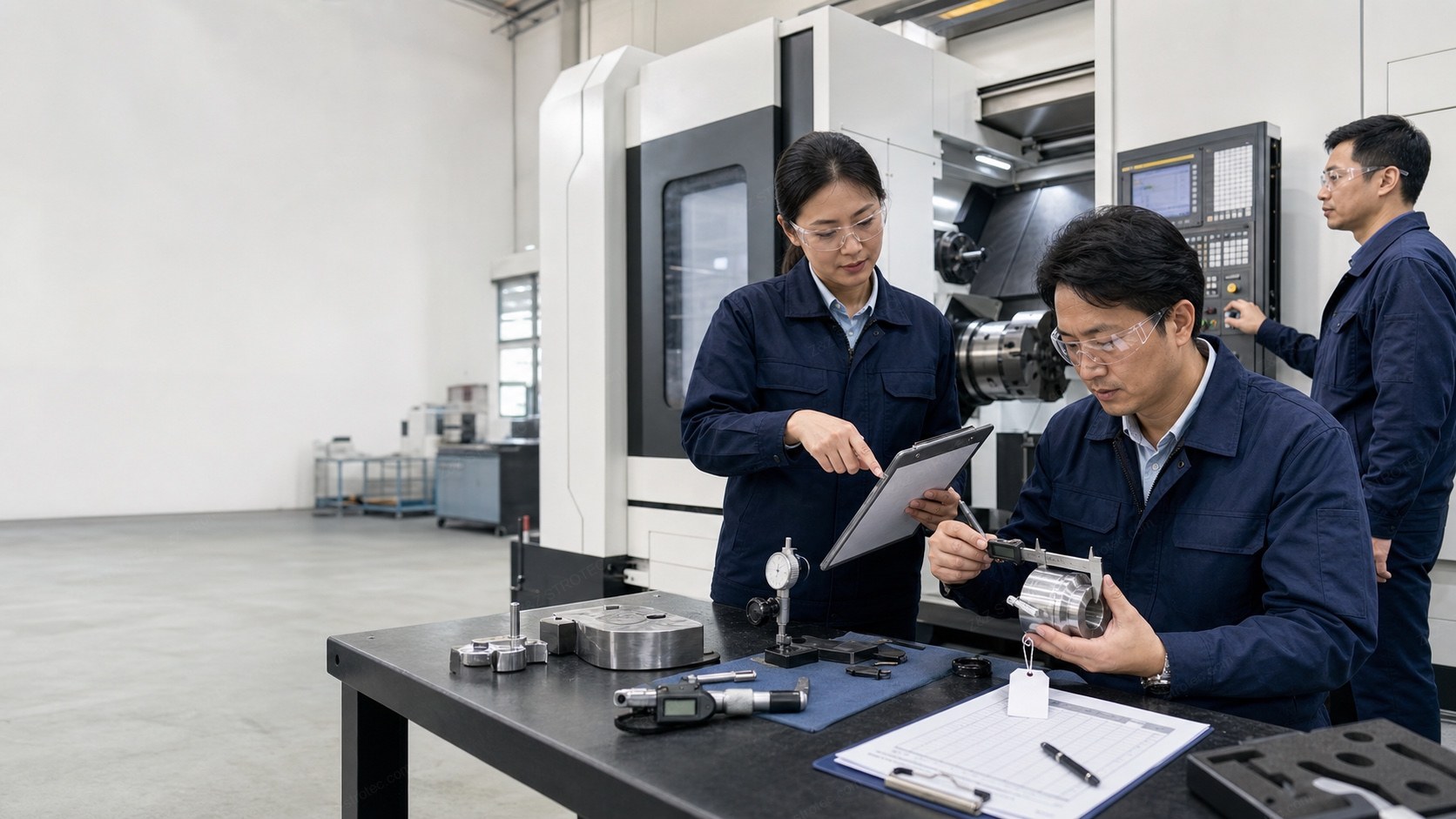
In international CNC transactions, a large share of the contract price usually falls due before shipment: 30% deposit and 70% before dispatch, 40/60 against a passed acceptance test, or staged payments with the last instalment released before loading. Once the balance is paid, the buyer's practical leverage drops. A supplier, equally, should not face open-ended acceptance demands or indefinite payment delay. The question that matters is not "is the machine finished?" but one that has to be settled at order stage: what counts as finished, who verifies it, how is it recorded, and what must be corrected before payment? The Factory Acceptance Test (FAT) is the procedure that answers all four.
在國際 CNC 工具機交易中,合約價款通常有相當比例在出貨前到期:30% 訂金加 70% 出貨前支付、40/60 於驗收通過後支付,或分階段付款而最後一筆在裝船前結清。尾款一旦支付,買方的議價能力通常會明顯下降;反過來說,賣方也不應面臨無限追加的驗收要求或無止盡的付款延遲。真正該問的不是「機台做好了嗎」,而是必須在下單階段就談定的四件事:什麼條件才算完成?由誰驗收?如何記錄?哪些問題必須在付款前改善?FAT(Factory Acceptance Test,出廠驗收)就是回答這四個問題的程序。
국제 CNC 공작기계 거래에서는 계약 금액의 상당 부분이 선적 전에 지급되는 경우가 많습니다. 계약금 30%에 출하 전 70%, 검수 통과 후 지급하는 40/60, 또는 마지막 회차를 선적 전에 결제하는 분할 지급 등입니다. 잔금을 지급하고 나면 바이어의 실질적인 협상력은 크게 줄어듭니다. 반대로 공급자 역시 범위가 정해지지 않은 검수 요구나 무기한 지급 지연에 노출되어서는 안 됩니다. 중요한 질문은 "장비가 완성되었는가"가 아니라, 발주 단계에서 확정해야 할 네 가지입니다. 무엇을 완료로 보는가, 누가 확인하는가, 어떻게 기록하는가, 지급 전에 무엇을 시정해야 하는가. 출하 전 검수(FAT)가 바로 이 네 가지에 답하는 절차입니다.
🔍 1. What a FAT Is, and What It Does Not Replace (FAT 是什麼,又不能取代什麼)
A FAT is a functional, specification and performance check carried out at the manufacturer’s plant before packing. It confirms that the machine delivered matches the order, that contracted options are present and complete, that the machine runs safely, that the main functions work, that accuracy meets the agreed figures, that test cuts meet the acceptance criteria, and it creates the written record on which payment, shipment and warranty rest. What a FAT cannot do is replace the Site Acceptance Test (SAT). After dismantling, packing, ocean transit, lifting and reinstallation, condition and accuracy still have to be re-established on the buyer’s floor. Put simply: the FAT proves the machine met the conditions for shipment; the SAT proves it meets the conditions for use.
FAT 的定位:FAT 是機台包裝出貨前,在製造商工廠進行的功能、規格與性能驗收。它確認交付機型與訂單一致、選配設備齊全、機台可安全運轉、主要功能正常、精度符合雙方約定、試切結果達到允收標準,並建立付款、出貨與保固所依據的書面紀錄。但 FAT 不能取代到廠後的 SAT,機台經過拆卸、包裝、海運、吊裝與重新安裝,現場狀態與精度仍須重新確認。簡單說:FAT 證明機台符合「出貨條件」,SAT 證明機台符合「使用條件」。
FAT의 위치: FAT는 포장·출하 전에 제조사 공장에서 실시하는 기능·사양·성능 검수입니다. 납품 기종이 발주 내용과 일치하는지, 계약 옵션이 빠짐없이 갖춰졌는지, 안전하게 운전되는지, 주요 기능이 정상인지, 정밀도가 합의된 수치를 만족하는지, 시험 절삭 결과가 합격 기준에 드는지를 확인하고, 지급·출하·보증의 근거가 되는 문서 기록을 남깁니다. 다만 FAT가 현장 검수(SAT)를 대신할 수는 없습니다. 해체·포장·해상 운송·양중·재설치를 거친 뒤에는 바이어 현장에서 상태와 정밀도를 다시 확인해야 합니다. 정리하면 FAT는 "출하 조건" 충족을, SAT는 "사용 조건" 충족을 증명합니다.
📝 2. Acceptance Is Agreed at Order Stage, Not After the Machine Is Built (驗收條件應在下單時談定)
The most common mistake is asking "can we inspect the machine?" only when the balance invoice arrives. If the quotation, order or contract says nothing about the FAT, the two sides can hold quite different assumptions: whether the FAT is included in the price; whether the buyer may attend in person; who bears travel cost; whether test cutting is included; who supplies test material and tooling; whether third-party inspection applies; whether the accuracy standard is the manufacturer’s own sheet or the buyer’s part tolerance; how long corrective work may take; which items may be deferred to the SAT; and whether the balance can be withheld if the FAT fails. None of this is comfortable to negotiate once the machine is standing finished on the floor.
不要等機台完工才談:最常見的錯誤,是買家收到尾款通知時才問「我們可以驗機嗎?」如果報價單、訂單或合約沒有寫明 FAT,雙方很可能對以下事項各有各的理解:FAT 是否含在價格內、買方能否親自到場、差旅費由誰負擔、是否包含試切、試切材料與刀具由誰提供、是否需要第三方檢驗、精度標準採原廠標準還是買方零件公差、驗收失敗後多久完成改善、哪些項目可保留到 SAT、FAT 未通過時能否暫緩尾款。這些條件等到機台完工才協商,對雙方都不好談。
완성 후가 아니라 발주 시점에: 가장 흔한 실수는 잔금 청구서를 받고 나서야 "검수를 할 수 있나요?"라고 묻는 것입니다. 견적서·주문서·계약서에 FAT가 명시되어 있지 않으면 양측의 전제가 서로 다를 수 있습니다. FAT가 가격에 포함되는지, 바이어가 직접 참관할 수 있는지, 출장비 부담 주체, 시험 절삭 포함 여부, 시험 소재와 공구 제공자, 제3자 검사 필요 여부, 정밀도 기준이 제조사 표준인지 바이어 부품 공차인지, 불합격 시 시정 기한, SAT로 이월 가능한 항목, FAT 불합격 시 잔금 보류 가능 여부 등입니다. 장비가 완성된 뒤에 이 조건들을 협의하는 것은 어느 쪽에도 유리하지 않습니다.
📄 3. What the Contract Should Actually Say (合約中至少要寫清楚的條件)
Three things need to be explicit. Scope: whether acceptance covers appearance and build quality, ordered specification, controller and software functions, spindle, axes and turret, magazine and automatic tool change, peripherals, safety functions, geometric accuracy, positioning and repeatability, test pieces, documentation and backups, and training. Criteria: "acceptance per the manufacturer’s standard" is usually too vague on its own; name the accuracy sheet that applies, the acceptance value for each measured item, the measuring equipment, warm-up time, test environment, test-piece material and size, tooling and fixturing, cutting conditions, surface finish and dimensional tolerance, and whether compensated results are acceptable. Method: buyer attendance, nominated third-party inspection, a live remote FAT, a manufacturer report plus complete video, or a combination. For high-value, high-precision or heavily customised equipment, releasing the full balance on the strength of a few photographs is generally not advisable where a better option exists.
合約要寫的三件事:其一是驗收範圍:是否涵蓋外觀與組裝品質、訂購規格、控制器及軟體功能、主軸/各軸/刀塔、刀庫與自動換刀、周邊設備、安全功能、幾何精度、定位與重複定位精度、試切件、文件與備份、教育訓練。其二是驗收標準:「依原廠標準驗收」通常過於模糊,應進一步指明適用的精度表、各項目允收值、使用的量測設備、暖機時間、測試環境、試件材料與尺寸、刀具及夾具、加工條件、表面粗糙度與尺寸公差,以及是否接受補正後結果。其三是驗收方式:買方親自到廠、指定第三方檢驗、視訊遠端 FAT、製造商提供測試報告與完整影片,或混合方式。高價、高精度或高度客製化設備,在條件允許時,通常不建議只憑幾張照片就支付全部尾款。
계약에 명시할 세 가지: 첫째 검수 범위입니다. 외관과 조립 품질, 발주 사양, 제어기 및 소프트웨어 기능, 주축·각 축·터렛, 매거진과 자동공구교환, 주변장치, 안전 기능, 기하 정밀도, 위치결정 및 반복 정밀도, 시험 가공품, 문서와 백업, 교육 훈련의 포함 여부를 정합니다. 둘째 합격 기준입니다. "제조사 표준에 따름"만으로는 대개 불충분하므로 적용 정밀도 표, 항목별 허용값, 측정 장비, 예열 시간, 시험 환경, 시험편 소재와 치수, 공구 및 지그, 절삭 조건, 표면 거칠기와 치수 공차, 보정 후 결과의 인정 여부를 명시합니다. 셋째 검수 방식입니다. 바이어 직접 참관, 지정 제3자 검사, 실시간 원격 FAT, 제조사 보고서와 전체 영상 제공, 또는 혼합 방식 중에서 정합니다. 고가·고정밀·고도 맞춤 설비라면 여건이 허락하는 한 사진 몇 장만으로 잔금 전액을 지급하는 것은 권장되지 않습니다.
📁 4. Review the Documents Before the Machine Runs (實體測試前先做文件審查)
Before any physical testing, obtain and cross-check the final technical specification, the order and option list, the machine layout drawing, controller model and software functions, spindle specification, turret / magazine / rotary table specification, chuck, cylinder and workholding, motors, pumps and supply frequency, peripheral brands and models, a draft packing list, and the acceptance procedure with its accuracy sheet. This step catches the class of problem where the machine is well built but is not the machine that was ordered. Typical gaps: the controller series is right but a software option was never enabled; spindle speed is right but motor power differs; coolant-through-spindle is fitted but pressure or flow falls short; a chip conveyor is fitted but discharges toward the wrong side for the shop layout; transformer voltage is right but capacity is not; the bar feeder interface or communication is unfinished; the turret has the right number of stations but the live tool holders are to a different specification.
先審文件,再看機台:實體測試前,買方應取得並核對最終技術規格書、訂單與選配清單、機台配置圖、控制器型號與軟體功能、主軸規格,刀塔/刀庫/旋轉工作台規格,夾頭、油壓缸及夾具規格,馬達、泵浦與電源頻率,周邊設備品牌與型號,裝箱清單草稿,以及驗收程序與精度表。這一步可以先攔截「機台做得很好,但不是買家訂的那一台」這類問題。常見落差包括:控制器系列正確但軟體選項沒開通;主軸轉速正確但馬達功率不同;有中心出水但壓力或流量不足;有排屑機但排屑方向不符工廠配置;變壓器電壓正確但容量不足;棒材送料機介面或通訊尚未完成;刀塔刀位數正確但動力刀座規格不同。
실물 시험 전에 문서부터: 실물 테스트에 앞서 최종 기술 사양서, 주문서와 옵션 목록, 장비 배치도, 제어기 모델과 소프트웨어 기능, 주축 사양, 터렛·매거진·로터리 테이블 사양, 척·실린더·치공구 사양, 모터·펌프·전원 주파수, 주변장치 브랜드와 모델, 패킹리스트 초안, 검수 절차와 정밀도 표를 받아 대조합니다. 이 단계에서 "잘 만들어진 장비이지만 발주한 그 장비는 아닌" 문제를 먼저 걸러낼 수 있습니다. 흔한 사례로는 제어기 시리즈는 맞지만 소프트웨어 옵션이 활성화되지 않은 경우, 주축 회전수는 맞지만 모터 출력이 다른 경우, 중심 관통 절삭유는 있으나 압력이나 유량이 부족한 경우, 칩 컨베이어는 있으나 배출 방향이 공장 배치와 맞지 않는 경우, 변압기 전압은 맞지만 용량이 부족한 경우, 바피더 인터페이스나 통신이 미완성인 경우, 터렛 공구 수는 맞지만 구동공구 홀더 사양이 다른 경우가 있습니다.
🏷️ 5. On the Day: Machine Identity and Ordered Specification (機台身分與訂購規格)
Start by confirming what is in front of you: manufacturer and model, serial number, year of manufacture, controller model, voltage and frequency, nameplate data, external condition, sheet metal and paint, doors, lighting and operator panel, and any oil or coolant leakage or unusual corrosion. The FAT report and photographs should show the serial number clearly; otherwise the acceptance record cannot be tied to the machine that actually ships. Then work through the purchase list item by item: spindle speed and power, spindle bore or taper, number of controlled axes, travels, turret or magazine capacity, live tooling, C / Y / B axis functions, tailstock or sub-spindle, chuck and cylinder, coolant-through-spindle, chip handling, probe, tool setter, bar feeder, parts catcher, stabiliser or isolation transformer, mist collection and safety equipment.
先確認身分,再逐項核對:當天先確認眼前這台機器:製造商與機型、機台序號、製造年份、控制器型號、電壓與頻率、銘牌資料、外觀鈑金與烤漆、門窗照明與操作面板,以及是否漏油、漏水或異常鏽蝕。FAT 報告與照片應清楚顯示序號,否則驗收資料無法證明對應到實際出貨的那台機器。接著逐項核對採購清單:主軸轉速與功率、主軸內孔或刀把規格、控制軸數、行程、刀塔或刀庫容量、動力刀具、C/Y/B 軸功能、尾座或副主軸、夾頭與油壓缸、中心出水、排屑系統、探針、對刀儀、棒材送料機、工件接收器、穩壓器或隔離變壓器、油霧回收與安全設備。
신원 확인 후 항목별 대조: 당일에는 먼저 눈앞의 장비를 확인합니다. 제조사와 기종, 기계 번호, 제조 연도, 제어기 모델, 전압과 주파수, 명판 정보, 외관·판금·도장, 도어·조명·조작 패널, 그리고 누유·누수나 이상 부식 여부입니다. FAT 보고서와 사진에는 기계 번호가 선명하게 나와야 합니다. 그렇지 않으면 검수 자료가 실제 출하 장비와 대응한다는 것을 증명할 수 없습니다. 이어서 구매 목록을 항목별로 대조합니다. 주축 회전수와 출력, 주축 내경 또는 테이퍼, 제어 축 수, 행정, 터렛 또는 매거진 용량, 구동공구, C·Y·B축 기능, 심압대 또는 서브 스핀들, 척과 실린더, 중심 관통 절삭유, 칩 처리 시스템, 프로브, 공구 세터, 바피더, 부품 수취기, 안정화 장치 또는 절연 변압기, 미스트 집진과 안전 설비입니다.
🛡️ 6. Safety and Basic Function Testing (安全與基本功能測試)
Test emergency stops, door interlocks, over-travel protection, low oil level and low air pressure alarms, spindle clamp confirmation, tool clamp confirmation, hydraulic pressure fault response, the machine’s state after a power interruption, and interruption and resumption of an automatic cycle. Safety devices should not be left bypassed for the convenience of testing; if a device is temporarily overridden during a specific test, that should be visible in the record and restored before the machine is signed off.
安全裝置不該為了方便測試而被旁路:測試項目包括緊急停止、安全門連鎖、超程保護、低油位與低氣壓警報、主軸夾緊確認、刀具夾緊確認、液壓壓力異常反應、斷電後的安全狀態,以及自動循環中斷與恢復。若某項測試過程中必須暫時解除某個安全裝置,這件事應留在紀錄中,並在驗收簽署前恢復。
안전장치를 시험 편의로 우회하지 않기: 비상 정지, 도어 인터록, 오버트래블 보호, 유면 저하 및 공압 저하 경보, 주축 클램프 확인, 공구 클램프 확인, 유압 이상 시 동작, 정전 후 안전 상태, 자동 사이클 중단과 복귀를 시험합니다. 특정 시험을 위해 안전장치를 일시적으로 해제해야 한다면 그 사실이 기록에 남아야 하며, 검수 서명 전에 원상 복구되어야 합니다.
⏱️ 7. Continuous Running: a Few Minutes Proves Little (連續運轉測試)
Switching the machine on for a few minutes will not reveal thermal growth, intermittent alarms or unstable tool changing. Depending on the complexity of the equipment, arrange a continuous run covering stepped spindle speed increase, full-travel movement on every axis, repeated tool change on the magazine or turret, coolant and chip conveyor operation, an automatic program cycle, interlocked operation of peripherals and a simulated production cycle. Record spindle temperature rise, load, vibration, unusual noise and the alarm history; the alarm history in particular often tells you more than the demonstration itself.
只開機幾分鐘,看不出問題:短時間運轉不足以發現熱變形、間歇性警報或換刀不穩。可依設備複雜度安排連續運轉,內容包含主軸分段升速、各軸全行程移動、刀庫或刀塔重複換刀、冷卻與排屑運轉、自動程式循環、周邊設備聯動與模擬生產循環。過程中應記錄主軸溫升、負載、振動、異音與警報歷史,其中警報歷史往往比示範本身更能說明問題。
몇 분 가동으로는 알 수 없습니다: 짧은 운전으로는 열변형, 간헐적 알람, 불안정한 공구 교환을 발견하기 어렵습니다. 설비 복잡도에 따라 연속 운전을 편성하고, 주축 단계별 승속, 각 축 전 행정 이동, 매거진 또는 터렛 반복 공구 교환, 절삭유와 칩 컨베이어 운전, 자동 프로그램 사이클, 주변장치 연동, 모의 생산 사이클을 포함합니다. 진행 중에는 주축 온도 상승, 부하, 진동, 이음, 알람 이력을 기록합니다. 특히 알람 이력은 시연 자체보다 더 많은 것을 알려주는 경우가 많습니다.
📊 8. An Accuracy Report Should Show More Than "PASS" (精度報告不能只看 PASS)
A useful report shows machine model and serial number, test date, tester, measuring equipment, calibration status, ambient temperature, warm-up conditions, the standard or acceptance value, the actual measured value, measurement positions, whether the figure is before or after compensation, and the final verdict. Three distinctions are worth holding in mind. Geometric accuracy is not machining accuracy. Levelling, straightness, squareness and spindle runout can all pass without guaranteeing that a particular part will hit tolerance first time. Positioning accuracy is not repeatability. A machine may return to nearly the same point every time while carrying a systematic offset, or average out correctly while scattering too widely move to move. Cold accuracy is not hot accuracy. If your cycles are long, spindle speeds high or tolerances tight, consider bringing warmed-up accuracy, thermal displacement or a long cycle into the acceptance scope. ISO standards are a reference for test method rather than a universal acceptance value: ISO 230-1 covers geometric accuracy test methods and ISO 230-2 covers positioning accuracy and repeatability of numerically controlled axes, with thermal effects addressed in ISO 230-3; CNC lathes and turning centres may refer to the ISO 13041 series and machining centres to the ISO 10791 series. Which items apply, and at what values, still has to be written into the contract to be commercially binding.
只寫 PASS 的報告價值有限:一份有用的精度報告至少應顯示機台型號與序號、測試日期、測試人員、量測設備、校正狀態、環境溫度、暖機條件、標準值或允收值、實際測量值、測量位置、補正前或補正後,以及最終判定。有三件事值得分清楚。幾何精度不等於加工精度,水平、直線度、垂直度與主軸跳動合格,不代表特定工件一定可以一次達到公差。定位精度不等於重複定位精度,機台可能每次都回到相近位置卻存在系統性偏差,也可能平均位置正確但每次移動的分散程度過大。冷機精度不等於熱機精度,若加工週期長、主軸轉速高或公差嚴格,應考慮將暖機後精度、熱位移或長時間循環納入驗收。ISO 標準是測試方法的參考,而非通用允收值:ISO 230-1 涵蓋幾何精度測試方法,ISO 230-2 涵蓋數值控制軸的定位精度與重複定位精度,熱效應則見於 ISO 230-3;CNC 車床與車削中心可參考 ISO 13041 系列,加工中心可參考 ISO 10791 系列。至於實際適用哪些項目、允收值是多少,仍須寫入合約才具商業約束力。
"PASS"만 적힌 보고서의 한계: 유용한 정밀도 보고서에는 기종과 기계 번호, 시험 일자, 시험자, 측정 장비, 교정 상태, 환경 온도, 예열 조건, 기준값 또는 허용값, 실측값, 측정 위치, 보정 전후 여부, 최종 판정이 포함되어야 합니다. 구분해 두면 좋은 세 가지가 있습니다. 기하 정밀도는 가공 정밀도가 아닙니다. 수평도·직진도·직각도·주축 흔들림이 합격이어도 특정 부품이 한 번에 공차에 든다는 보장은 없습니다. 위치결정 정밀도는 반복 정밀도가 아닙니다. 매번 비슷한 위치로 복귀하면서도 계통 오차가 있을 수 있고, 평균 위치는 맞지만 이동마다 산포가 클 수도 있습니다. 냉간 정밀도는 열간 정밀도가 아닙니다. 가공 사이클이 길거나 주축 회전수가 높거나 공차가 엄격하다면 예열 후 정밀도, 열변위, 장시간 사이클을 검수 범위에 넣는 것을 검토하십시오. ISO 규격은 시험 방법의 참고 기준이지 보편적 합격값이 아닙니다. ISO 230-1은 기하 정밀도 시험 방법을, ISO 230-2는 수치제어 축의 위치결정 및 반복 정밀도를 다루며 열 영향은 ISO 230-3에 있습니다. CNC 선반과 터닝센터는 ISO 13041 시리즈를, 머시닝센터는 ISO 10791 시리즈를 참조할 수 있습니다. 어떤 항목을 어떤 값으로 적용할지는 계약서에 기재되어야 상업적 구속력을 가집니다.
🧩 9. Test Pieces: Standard Part vs Your Own Component (試切件才最接近生產)
A standard test piece evaluates general machine capability and is easy to compare against an accuracy specification. A representative buyer’s component, using real material, real workholding, real tooling and a realistic process, is better evidence that the machine suits the purpose it was bought for. If a customer component is to be used, agree in advance the drawing revision, material specification, blank size, tooling and fixturing, CAM program, cycle time, the number of trial adjustments allowed, measurement method, critical dimensions, surface finish, quantity, and who keeps the resulting parts. What does not work is producing a difficult drawing the manufacturer has never seen on the day of the FAT and asking for production takt time immediately. That is neither fair to the supplier nor a sound basis for acceptance.
兩種試切件的取捨:標準試件用於評估機台的一般加工能力,便於與精度規範對照;買方代表性工件使用接近實際生產的材料、夾持方式、刀具與加工流程,更能確認機台是否符合採購目的。若要用買方工件進行 FAT,合約應事先確認圖面版本、材料規格、毛胚尺寸、刀具與夾具、CAM 程式、加工時間、可接受的試調次數、量測方法、關鍵尺寸、表面粗糙度、工件數量,以及驗收結果歸屬。行不通的做法是:在 FAT 當天才拿出一張製造商從未看過的高難度零件圖,然後要求立即達到量產節拍。這對供應商不公平,也無法形成有效的驗收依據。
두 가지 시험편의 선택: 표준 시험편은 장비의 일반적인 가공 능력을 평가하며 정밀도 규격과 대조하기 쉽습니다. 바이어의 대표 부품은 실제 생산에 가까운 소재·척킹·공구·공정을 사용하므로 장비가 구매 목적에 부합하는지를 더 잘 확인할 수 있습니다. 바이어 부품으로 FAT를 진행하려면 도면 리비전, 소재 사양, 소재 치수, 공구와 지그, CAM 프로그램, 가공 시간, 허용되는 시험 조정 횟수, 측정 방법, 주요 치수, 표면 거칠기, 수량, 결과물 귀속을 사전에 계약으로 정해야 합니다. 반면 FAT 당일에 제조사가 한 번도 본 적 없는 고난도 도면을 꺼내며 즉시 양산 택트타임을 요구하는 방식은 곤란합니다. 공급자에게 공정하지 않을 뿐 아니라 유효한 검수 근거도 되지 못합니다.
📹 10. Making a Remote FAT Verifiable (遠端 FAT 怎麼做才有意義)
When attending in person is not possible, a video FAT still works, provided a test script is agreed in advance. Ask for a continuous live stream rather than an edited film; a shot of the nameplate and serial number; the day’s date or an agreed verification code shown on camera; the buyer nominating some tool stations or programs in real time; the alarm history displayed on screen; the measuring instrument being zeroed and read; the test piece being measured; the original accuracy report; and high-resolution photographs with unedited footage. The point of a remote FAT is not production value. It is whether the record can demonstrate two things: that the machine being tested is the machine that will ship, and that no critical step was skipped.
視訊 FAT 的重點不是畫面漂亮:無法親自到場時,視訊 FAT 仍可發揮作用,但應事先提供測試腳本。建議要求:連續直播而非剪輯影片;拍攝機台銘牌及序號;鏡頭前顯示當日日期或約定的驗證碼;由買方即時指定部分刀位或程式;即時顯示警報歷史;拍攝量測儀器歸零與讀值;拍攝試切件量測過程;提供原始精度報告;提供高解析照片與未剪輯影片。遠端 FAT 真正要證明的是兩件事:被測試的就是將要出貨的那台機器,而且測試程序沒有跳過關鍵項目。
원격 FAT의 핵심은 화면 품질이 아닙니다: 직접 참관이 어려울 때도 화상 FAT는 유효하지만, 시험 스크립트를 사전에 합의해야 합니다. 편집 영상이 아닌 연속 실시간 중계, 명판과 기계 번호 촬영, 당일 날짜 또는 합의된 인증 코드의 화면 노출, 바이어가 실시간으로 지정하는 일부 공구 위치나 프로그램, 알람 이력의 실시간 표시, 측정기 영점 조정과 판독 장면, 시험편 측정 과정, 원본 정밀도 보고서, 고해상도 사진과 미편집 영상을 요청하십시오. 원격 FAT가 증명해야 할 것은 두 가지입니다. 시험 대상이 곧 출하될 그 장비라는 점, 그리고 핵심 절차가 생략되지 않았다는 점입니다.
🗂️ 11. Classifying Findings, and the Punch List (問題分類與 Punch List)
Findings should be sorted by severity rather than listed flat. Class A (must be corrected before shipment): specification does not match the order, significant accuracy failure, a safety function not working, spindle or drive fault, a core option missing, the agreed test cut cannot be completed, or frequent unexplained alarms. Class B (correctable and re-verified remotely): a software option not yet enabled, parameters needing adjustment, peripheral interlock faults, incomplete documentation, cosmetic repair. Class C (reasonably deferred to the SAT): tests that can only be completed once external equipment is connected on the buyer’s site, components that must be removed for transport and refitted on arrival, and items that depend on local power or facility conditions. Every finding belongs on a punch list with a photograph, an owner, a deadline and the re-verification method.
依嚴重程度分類,而不是流水帳:A 類(出貨前必須改善):規格與訂單不符、重大精度不合格、安全功能失效、主軸或驅動器異常、核心選配缺失、無法完成約定試切、頻繁發生不明警報。B 類(可改善後遠端複驗):軟體選項尚未開通、部分參數需要調整、周邊設備聯動異常、文件不完整、外觀需要修補。C 類(可列入 SAT 確認):必須在買方現場接上外部設備才能完成的測試、因運輸需要拆除而到廠後重新安裝的組件、依當地電源或廠務條件才能確認的項目。所有問題都應列入 Punch List,附上照片、責任人、期限與複驗方式。
나열이 아니라 심각도별 분류: A급(출하 전 반드시 시정): 사양과 주문 불일치, 중대한 정밀도 불합격, 안전 기능 미작동, 주축 또는 드라이브 이상, 핵심 옵션 누락, 약정 시험 절삭 수행 불가, 원인 불명 알람의 빈발입니다. B급(시정 후 원격 재확인 가능): 소프트웨어 옵션 미개방, 일부 파라미터 조정 필요, 주변장치 연동 이상, 문서 미비, 외관 보수입니다. C급(SAT로 이월 가능): 바이어 현장에서 외부 장비를 연결해야 완료되는 시험, 운송을 위해 해체했다가 도착 후 재설치하는 구성품, 현지 전원이나 유틸리티 조건에 따라 확인되는 항목입니다. 모든 지적 사항은 사진, 책임자, 기한, 재확인 방법과 함께 펀치리스트에 기록합니다.
💰 12. When the Balance Can Reasonably Be Released (何時可以支付尾款)
Whether the balance falls due is governed by the contract. A sound set of conditions is usually: the agreed FAT has been completed; all Class A findings are closed; Class B findings have written corrective action and re-verification results; final specification and options are confirmed; accuracy and test-cut reports have been received; the packing list is approved; delivery and shipping arrangements are confirmed; warranty terms and the after-sales contact are documented; the scope of outstanding SAT items is clearly defined; and invoice, export and transport documents are in order. Keep the full record before paying: correspondence, signed reports, video, photographs and test data. A buyer should not skip an agreed FAT because the supplier says the container is already booked or that the machine cannot ship without payment. Equally, a buyer should not defer payment indefinitely on the strength of new requirements that were never in the contract. A well-defined FAT protects both sides.
付款條件應以合約為準:較穩健的條件通常是:FAT 已依約完成;A 類問題全部關閉;B 類問題已有書面改善及複驗結果;最終規格與選配已確認;精度與試切報告已收到;裝箱清單已確認;交期與出貨安排已確認;保固與售後窗口已書面確認;未完成的 SAT 項目已有明確範圍;發票、出口與運輸文件安排無誤。付款前應保存完整資料,包括往來信件、簽署報告、影片、照片與測試紀錄。買方不應因為供應商表示「貨櫃已經訂好」或「不付款就無法出貨」,就跳過原本約定的 FAT;但買方也不應以與合約無關的新要求無限延後付款。一套定義清楚的 FAT,是同時保護雙方的。
지급 조건은 계약을 기준으로: 비교적 안정적인 조건은 다음과 같습니다. 약정된 FAT 완료, A급 지적 사항 전건 종결, B급 지적 사항의 서면 시정 및 재확인 결과 확보, 최종 사양과 옵션 확정, 정밀도 및 시험 절삭 보고서 수령, 패킹리스트 확정, 납기와 출하 일정 확정, 보증 조건과 사후 서비스 창구의 서면 확인, 미완료 SAT 항목의 범위 명확화, 인보이스·수출·운송 서류의 정합성입니다. 지급 전에는 왕래 서신, 서명된 보고서, 영상, 사진, 시험 기록 등 자료 일체를 보관하십시오. 공급자가 "컨테이너를 이미 예약했다" 또는 "지급하지 않으면 출하할 수 없다"고 해서 약정된 FAT를 건너뛰어서는 안 됩니다. 반대로 계약에 없던 새로운 요구를 근거로 지급을 무기한 미루는 것도 적절하지 않습니다. 잘 정의된 FAT는 양측 모두를 보호합니다.
🤝 13. Payment and Acceptance Structures: Examples Only (付款與驗收設計範例)
These are commercial illustrations, not a recommendation for every transaction. Standard equipment: deposit on order confirmation, balance on a passed FAT, warranty starting on SAT completion. High-value or customised equipment: first instalment on order confirmation, second on completion of major assemblies, third on a passed FAT, with a small retention held until the SAT is complete. Letter of credit or documentary payment: make the FAT certificate, third-party inspection certificate or specified technical documents part of the payment document set. The right structure depends on contract value, the credit standing of both parties, how customised the equipment is, bank requirements and negotiating position. Where the amounts justify it, have the arrangement reviewed by trade, finance or legal professionals.
以下僅為商務設計範例,不代表適用於所有交易:方案一,標準設備:訂單確認後支付訂金,FAT 通過後支付出貨尾款,SAT 完成後啟動正式保固。方案二,高價或客製化設備:訂單確認後支付第一期,主要零組件完成後支付第二期,FAT 通過後支付第三期,保留小比例款項至 SAT 完成。方案三,信用狀或銀行文件付款:將 FAT 證明、第三方檢驗證明或特定技術文件納入付款文件條件。實際安排須考慮交易金額、雙方信用、設備客製程度、銀行要求與談判能力;金額達到一定規模時,應由貿易、財務或法律專業人員審閱。
아래는 상업적 설계 예시이며 모든 거래에 그대로 적용되지 않습니다. 안 1, 표준 설비: 주문 확정 시 계약금, FAT 통과 후 출하 잔금, SAT 완료 시 정식 보증 개시입니다. 안 2, 고가 또는 맞춤 설비: 주문 확정 시 1차, 주요 부품 완성 시 2차, FAT 통과 후 3차를 지급하고 소액을 SAT 완료 시까지 유보합니다. 안 3, 신용장 또는 서류 결제: FAT 증명서, 제3자 검사 증명서, 지정 기술 문서를 결제 서류 조건에 포함합니다. 실제 구성은 거래 금액, 양측의 신용, 설비의 맞춤 정도, 은행 요건, 협상력에 따라 달라집니다. 금액이 일정 규모 이상이라면 무역·재무·법무 전문가의 검토를 받는 것이 좋습니다.
✅ Z&Z STROTEC FAT Checklist
Documents: final technical specification · model and serial number · option list · controller and software functions · voltage and frequency · FAT procedure and acceptance values.
Function: axes and spindle · magazine or turret · safety interlocks · hydraulics, lubrication and coolant · chip handling and peripherals · continuous automatic cycle · alarm history.
Accuracy and test cut: geometric accuracy · positioning and repeatability · spindle runout · circular or contour test · test-piece dimensions · surface finish · measurement report.
Before payment and shipment: critical findings closed · punch list signed · corrective work re-verified · documents and backups received · packing list approved · SAT scope defined · warranty start date agreed.
文件確認:最終技術規格書・機型與序號・選配清單・控制器與軟體功能・電壓與頻率・FAT 程序與允收值。
功能確認:各軸與主軸・刀庫或刀塔・安全連鎖・液壓潤滑與冷卻・排屑及周邊設備・連續自動循環・警報歷史。
精度與試切:幾何精度・定位與重複定位・主軸跳動・圓弧或輪廓測試・試切件尺寸・表面粗糙度・量測報告。
付款與出貨前:重大問題已關閉・Punch List 已簽署・改善結果已複驗・文件與備份已取得・裝箱清單已確認・SAT 範圍已確認・保固起算方式已確認。
문서 확인: 최종 기술 사양서 · 기종과 기계 번호 · 옵션 목록 · 제어기와 소프트웨어 기능 · 전압과 주파수 · FAT 절차와 허용값.
기능 확인: 각 축과 주축 · 매거진 또는 터렛 · 안전 인터록 · 유압·윤활·절삭유 · 칩 처리와 주변장치 · 연속 자동 사이클 · 알람 이력.
정밀도와 시험 절삭: 기하 정밀도 · 위치결정과 반복 정밀도 · 주축 흔들림 · 원호 또는 윤곽 시험 · 시험편 치수 · 표면 거칠기 · 측정 보고서.
지급·출하 전: 중대 지적 사항 종결 · 펀치리스트 서명 · 시정 결과 재확인 · 문서와 백업 수령 · 패킹리스트 확정 · SAT 범위 확정 · 보증 기산일 합의.
🎯 Conclusion: the Balance Payment Is a Quality Gate, Not a Bargaining Tool (結論:尾款是品質管理節點,不是壓價工具)
A FAT is not an exercise in finding fault, nor a way to use the outstanding balance to extract commitments that were never in the contract. A clearly defined FAT tells the manufacturer what has to be delivered, tells the buyer what has to be checked, and puts payment and shipment on verifiable facts rather than assurances. In cross-border CNC procurement, the real risk is not that a machine turns out to have a problem; it is that neither side discusses what "accepted" actually means until the machine is already finished.
萬洋國際的觀察:FAT 的目的不是刻意挑問題,也不是利用尾款迫使供應商接受合約以外的要求。一套定義清楚的 FAT,能讓製造商知道該交付什麼,讓買家知道該檢查什麼,也讓付款與出貨建立在可以驗證的事實上,而不是口頭保證。對跨國 CNC 採購而言,真正的風險不是機台出現問題,而是雙方直到機台完成後,才第一次討論「什麼叫做驗收合格」。
Z&Z STROTEC의 관점: FAT는 흠을 잡기 위한 절차도, 잔금을 지렛대 삼아 계약에 없던 요구를 관철하기 위한 수단도 아닙니다. 명확하게 정의된 FAT는 제조사에게 무엇을 인도해야 하는지를, 바이어에게 무엇을 확인해야 하는지를 알려주고, 지급과 출하를 구두 약속이 아닌 검증 가능한 사실 위에 올려놓습니다. 국경을 넘는 CNC 조달에서 진짜 위험은 장비에 문제가 생기는 것이 아니라, 장비가 완성되고 나서야 "합격이란 무엇인가"를 처음 논의하게 되는 상황입니다.
Need an Acceptance Plan Before You Place the Order?
Z&Z STROTEC arranges factory acceptance for overseas buyers of Taiwanese machine tools by defining the scope and acceptance values at quotation stage, attending or streaming the test, and following the punch list through to shipment.
장비 모델명, 부품 번호 또는 현장 사진을 보내주시면 공급 가능 여부와 가격을 회신드립니다.
Multi-brand selection rather than one factory, spec and compatibility checks in writing, a test cut and inspection at the plant before the machine ships, export documentation, and the same part number still available years later. Installation and after-sales in Korea, Brazil, Switzerland and Argentina run through local agents; for other markets we supply parts and components.
不綁單一工廠的多品牌選型、白紙黑字的規格與相容性確認、出貨前在工廠端試車驗機、出口文件,以及數年後仍拿得到的同一料號。韓國、巴西、瑞士、阿根廷的安裝與售後由在地服務商執行,其他市場我們供應零件與零組件。
단일 공장에 묶이지 않는 다중 브랜드 선정, 문서로 남기는 사양·호환성 확인, 선적 전 공장 시운전과 검사, 수출 서류, 그리고 수년 뒤에도 확보 가능한 동일 품번. 한국·브라질·스위스·아르헨티나의 설치와 애프터서비스는 현지 대리점이 담당하며, 그 외 시장에는 부품을 공급합니다.