 Z&Z STROTEC
Live Tool Holder Troubleshooting: Causes of Overheating, Noise, Runout and Coolant Leakage
動力刀座故障診斷:過熱、異音、偏擺與漏水的原因及處理方式
라이브 툴 홀더 고장 진단: 과열·이음·런아웃·절삭유 누유의 원인과 대처
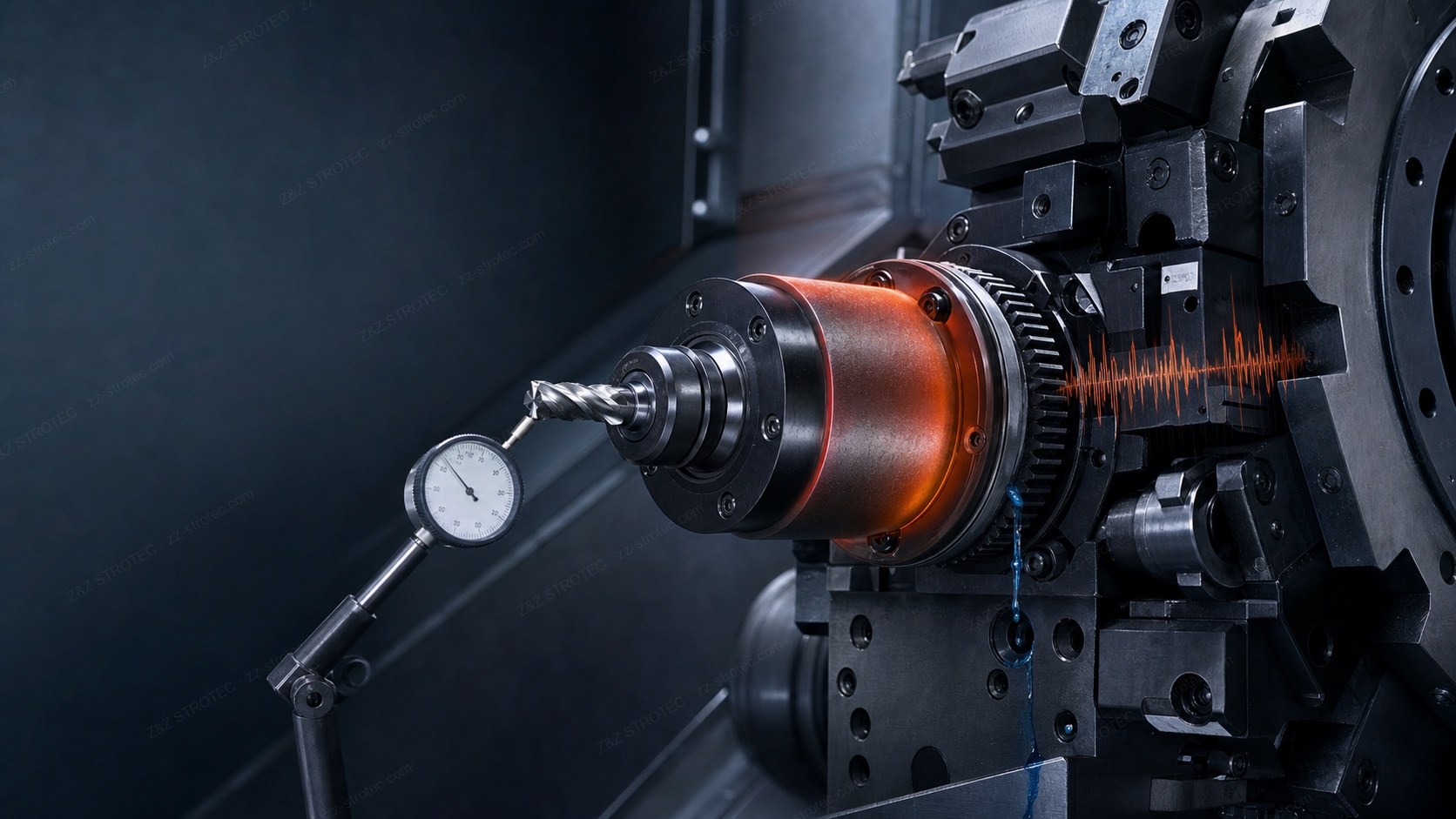
A live tool holder lets a CNC lathe mill, drill, tap and machine off-centre features, and it is what makes done-in-one turning possible. It also spends its life under conditions that wear parts out: high rotational speed, frequent starts and stops, cutting load, coolant pressure and machining vibration all act on the same bearings, gears, drive coupling and rotary seals. When one of those fails, the cost is rarely limited to the holder itself: scrapped parts, broken tools, drifting accuracy, unplanned downtime and, in the worst case, damage to the turret drive. Almost everything reported from the shop floor falls into four families: overheating, abnormal noise and micro-vibration, excessive runout with loss of accuracy, and coolant leakage. This article sets out what each symptom usually means, how to narrow it down on the machine, and where the sensible line is between carrying on, stopping, and sending the holder out for repair.
動力刀座(Live Tool Holder/Driven Tool Holder)讓 CNC 車床可以進行銑削、鑽孔、攻牙及側面加工,是實現「一次裝夾完成」(Done-in-One)的關鍵零組件。同時,它長期承受高速旋轉、頻繁啟停、切削負載、冷卻液壓力與加工震動,內部軸承、齒輪、驅動接頭與旋轉密封件都會逐漸磨耗。一旦故障,代價通常不只是刀座本身:工件報廢、刀具斷裂、精度下降、非計畫性停機,嚴重時還可能波及刀塔驅動機構。現場回報的異常,幾乎都可歸納為四類:過熱、異音與微震動、偏擺與精度下降、冷卻液洩漏。以下說明各症狀通常代表什麼、在機台上如何逐步縮小範圍,以及「繼續加工/停機/送修」之間合理的分界。
라이브 툴 홀더(동력 공구대)는 CNC 선반에서 밀링·드릴링·탭핑·측면 가공을 가능하게 하며, 한 번의 척킹으로 가공을 끝내는(Done-in-One) 방식의 핵심 부품입니다. 동시에 고속 회전, 잦은 기동과 정지, 절삭 부하, 절삭유 압력, 가공 진동을 계속 받으며 베어링·기어·구동 커플링·회전 실이 점차 마모됩니다. 고장이 나면 손실은 홀더 자체에 그치지 않습니다. 공작물 불량, 공구 파손, 정밀도 저하, 계획에 없던 정지, 심하면 터렛 구동부 손상까지 이어질 수 있습니다. 현장에서 보고되는 이상은 대부분 네 가지로 나뉩니다. 과열, 이음과 미세 진동, 런아웃 증가와 정밀도 저하, 절삭유 누유입니다. 이 글에서는 각 증상이 보통 무엇을 뜻하는지, 기계에서 어떻게 범위를 좁혀 가는지, 그리고 계속 가공할지·정지할지·수리를 보낼지의 합리적인 경계를 정리합니다.
🌡️ 1. Overheating (過熱與異常發熱)
Precision bearings are sensitive to temperature, and some temperature rise in service is normal. What matters is the change: a housing that climbs quickly, or runs clearly hotter than the same holder did under the same cutting conditions a month ago, points to internal friction or a load the holder was not specified for. Some shops treat around 70 °C as a warning marker, but that figure is not a universal fault threshold. It depends on the make, the model, where the reading is taken and the ambient temperature. The reliable reference is the manufacturer's specification, the permitted duty cycle, and the holder's own baseline rise when it was healthy. Common causes: running at or near maximum speed for long periods, because a maximum rating is not always a continuous rating and many holders have a stated duty cycle; exceeding rated torque through heavy cuts, long tool overhang, oversized cutters or frequent rapid acceleration and deceleration; degraded, contaminated, insufficient or incompatible lubricant, or bearings that are already worn or wrongly preloaded; and seals that have hardened or been fitted incorrectly, adding drag to the output shaft. Manufacturers' operating instructions are consistent on the basic point: a live tool must not be run beyond its rated speed or torque, and doing so accelerates bearing and gear wear.
What to do: stop heavy cutting and record the holder model, spindle speed, running time, cutting conditions and how the temperature trended. Run the holder briefly at reduced speed with no cutting load and compare loaded against unloaded temperature; that single comparison separates a cutting-load problem from an internal one. If the application calls for sustained high-speed micro-drilling, a bearing configuration intended for high speed, such as a hybrid ceramic arrangement, may be worth evaluating: the rolling elements are lighter and behave better at speed, though the real gain depends on the bearing design, lubrication, preload and the structure of the holder as a whole, not on the word "ceramic" in a datasheet. Some newer lathes use a direct-drive live turret, where a servo motor drives the live tool spindle without the turret's intermediate gear train, which removes one source of backlash, friction and heat; the motor still needs cooling and the turret still has a permitted continuous duty. If the holder keeps heating up after speed is reduced and the cutting load removed, or heat comes with noise, vibration or a burnt smell, stop and send it for repair.
溫度要看趨勢,不要只看數字:精密軸承對溫度敏感,運轉中有一定溫升本來就正常,關鍵在「變化」:外殼溫度快速上升,或明顯高於同一支刀座上個月在相同條件下的溫度,通常代表內部摩擦或負載異常。部分現場會把約 70 °C 當作警戒參考,但這不是通用的故障界線,它會因品牌、型號、量測位置與環境溫度而不同。可靠的依據是製造商規格、允許的工作週期,以及這支刀座健康時自己的溫升基準。常見原因:長時間接近最高轉速運轉(最高轉速不等於可連續運轉的轉速,多數刀座有規定的工作週期);重切削、刀具伸出過長、刀具直徑過大或頻繁高速加減速而超出額定扭矩;潤滑劣化、污染、供應不足或使用不相容的潤滑材料,或軸承已磨耗、預壓異常;油封老化變形或安裝不正,增加輸出軸旋轉阻力。各家製造商的操作說明在基本原則上一致:動力刀座不應超過額定轉速與扭矩,否則會加速軸承與齒輪磨耗。
處理方式:先停止重切削,記錄刀座型號、轉速、加工時間、切削條件與溫升趨勢;再以較低轉速、無切削負載短時間空轉,比較有負載與無負載的溫度差異,光是這個比較,就能分辨問題出在切削條件還是刀座內部。若應用本來就需要長時間高速微鑽孔,可評估適合高速用途的軸承配置(例如陶瓷混合軸承):滾動體較輕、高速特性較好,但實際效果取決於軸承設計、潤滑、預壓與整體刀座結構,不能只看型錄上「陶瓷」兩個字。部分新型車床採用直驅式動力刀塔,由伺服馬達直接驅動動力刀具軸,省去刀塔內部的傳動齒輪組,減少背隙、摩擦與熱源;但馬達仍需冷卻,刀塔也仍有允許的連續工作條件。若降低轉速並移除切削負載後仍持續升溫,或伴隨異音、震動、焦味,應立即停機送修。
온도는 숫자보다 추세로 봅니다: 정밀 베어링은 온도에 민감하며 운전 중 어느 정도의 온도 상승은 정상입니다. 중요한 것은 변화입니다. 하우징 온도가 빠르게 오르거나, 같은 홀더가 한 달 전 같은 조건에서 보이던 온도보다 뚜렷하게 높다면 내부 마찰이나 과부하를 의심해야 합니다. 일부 현장은 약 70 °C를 경고 기준으로 쓰지만 이는 모든 제품에 통하는 고장 판정선이 아닙니다. 제조사·모델·측정 위치·주변 온도에 따라 달라지기 때문입니다. 신뢰할 기준은 제조사 사양, 허용 듀티 사이클, 그리고 정상일 때 그 홀더가 보이던 자체 기준값입니다. 흔한 원인은 최고 회전수 부근에서의 장시간 운전(최고 회전수가 곧 연속 운전 가능 회전수는 아니며 대부분 듀티 사이클이 규정되어 있습니다), 중절삭·과도한 공구 돌출·큰 공구경·빈번한 급가감속에 따른 정격 토크 초과, 윤활유의 열화·오염·부족·부적합 또는 이미 마모되었거나 예압이 어긋난 베어링, 경화·변형되었거나 잘못 조립된 실에 의한 출력축 회전 저항 증가입니다. 제조사 취급설명서의 기본 원칙은 같습니다. 정격 회전수와 토크를 넘겨 사용하면 베어링과 기어 마모가 빨라집니다.
대처: 우선 중절삭을 멈추고 홀더 모델, 회전수, 가공 시간, 절삭 조건, 온도 추이를 기록하십시오. 이어서 낮은 회전수로 무부하 공회전을 짧게 실시해 부하 시와 무부하 시의 온도를 비교하면, 절삭 조건 문제인지 홀더 내부 문제인지 구분됩니다. 장시간 고속 마이크로 드릴링이 필요한 공정이라면 하이브리드 세라믹 같은 고속용 베어링 구성을 검토할 수 있습니다. 전동체가 가볍고 고속 특성이 유리하지만, 실제 효과는 베어링 설계·윤활·예압·홀더 전체 구조에 달려 있으며 카탈로그의 "세라믹"이라는 단어만으로 판단할 수 없습니다. 일부 신형 선반은 다이렉트 드라이브 터렛을 채택해 서보 모터가 동력 공구축을 직접 구동하고 터렛 내부 기어 트레인을 없애 백래시·마찰·발열 요인을 줄입니다. 다만 모터 냉각은 여전히 필요하고 터렛에도 허용 연속 운전 조건이 있습니다. 회전수를 낮추고 절삭 부하를 없앤 뒤에도 계속 온도가 오르거나 이음·진동·탄 냄새가 함께 나타나면 즉시 정지하고 수리를 의뢰하십시오.
🔊 2. Abnormal Noise and Micro-Vibration (異音與微震動)
A squeal, a regular knock, a rubbing sound, or noise that changes character with speed generally means something inside is making contact it should not, or has clearance it should not. The symptom rarely stays inside the holder: surface roughness (Ra) deteriorates, periodic tool marks appear, and chatter sets in. Four causes account for most cases. Gear backlash increases as gear teeth wear, and in a geared or speed-increasing holder the small impacts each time load direction reverses produce a regular knock and high-frequency vibration, but a gear train must have design backlash to run at all, so measurable clearance is not by itself a fault; it has to be judged against the manufacturer's figure or a known-good holder. Bearing wear or damage to raceways, balls or cages gives a sharper noise, a gritty feel by hand and irregular vibration, usually alongside a temperature rise. Poor dynamic balance matters more the faster the holder runs, since centrifugal force from an unbalanced tool, collet, nut or internal rotating part rises with speed; a holder that has been crashed, or dismantled by someone without the fixtures to reassemble it correctly, may no longer be balanced as built. A worn or incompletely engaged drive coupling, whether from wrong specification, misalignment with the turret drive shaft, or simple wear, produces knocking and periodic vibration that is easy to mistake for a bearing fault.
How to narrow it down: work through five comparisons in order: does the noise persist with the cutting load removed; does it differ between low and high speed; does it appear in both directions of rotation; does it come from the front end, the drive end or inside the turret; and does it disappear when a known-good holder is fitted in the same station. Those five answers usually localise the fault without any dismantling. If turning the output shaft by hand already reveals catching, roughness, obvious play or visible runout, do not go on to a high-speed test. When replacement is the outcome, choose on gear quality, bearing configuration and balancing capability rather than on price alone, because good balancing does reduce centrifugal force and micro-vibration at speed. Treat any supplier claim of "zero runout" or a fixed percentage of vibration improvement as marketing unless it comes with a test report for that specific holder.
聲音會先反映在工件表面:尖銳聲、規律敲擊聲、摩擦聲,或轉速改變時聲音明顯不同,通常代表內部已有不該有的接觸或間隙。症狀很少停在刀座本身:表面粗糙度 Ra 惡化、出現週期性刀紋、產生顫振。常見原因有四類。齒輪背隙增加:齒面磨耗後間隙變大,在齒輪傳動或增速刀座中,負載方向反覆變化時的微小撞擊會形成規律噪音與高頻震動;但齒輪系統本來就必須保留設計背隙,可量測到間隙不等於故障,應與原廠規格或已知正常的刀座比較。軸承磨耗或損傷:滾道、滾珠或保持架受損後聲音偏尖銳,手轉有粗糙感、震動不規則,且多半伴隨溫度上升。動平衡不良:轉速越高影響越大,刀具、筒夾、螺帽或內部旋轉組件不平衡時,離心力隨轉速放大;刀座曾經碰撞,或由沒有專用治具的人員拆裝過,都可能不再維持出廠的平衡狀態。驅動接頭磨耗或嚙合不完整:規格不符、與刀塔驅動軸位置不正或已磨耗,會產生敲擊聲與週期性震動,很容易被誤判成軸承問題。
如何縮小範圍:依序做五項比較:拆除切削負載後是否仍有異音;低速與高速的聲音是否不同;正轉與反轉是否都出現;聲音來自刀座前端、驅動端還是刀塔內部;換上另一支已知正常的刀座、裝在同一刀位後症狀是否消失。這五個答案通常不需拆解就能定位問題。若用手轉動輸出軸已能感覺卡點、粗糙、明顯間隙或看得到偏擺,就不應再做高速測試。若結論是更換,應以齒輪精度、軸承配置與動平衡能力為選擇依據,而不是只比價格,因為良好的動平衡確實能降低高速離心力與微震動。至於「零偏擺」或固定比例的震動改善幅度,在沒有該支刀座的實測報告之前,都應視為行銷說法。
소리는 공작물 표면에 먼저 나타납니다: 날카로운 소리, 규칙적인 타격음, 마찰음, 회전수에 따라 성격이 달라지는 소음은 대개 내부에서 있어서는 안 될 접촉이나 간극이 생겼다는 뜻입니다. 증상은 홀더 안에만 머물지 않습니다. 표면 거칠기(Ra)가 나빠지고 주기적인 공구 자국이 생기며 채터가 발생합니다. 원인은 크게 네 가지입니다. 기어 백래시 증가: 치면이 마모되면 간극이 커지고, 기어 구동식이나 증속형 홀더에서는 부하 방향이 바뀔 때마다 생기는 미세 충격이 규칙적인 소음과 고주파 진동을 만듭니다. 다만 기어 계통에는 설계상 백래시가 반드시 있어야 하므로, 간극이 측정된다는 사실만으로 고장이라 볼 수 없고 제조사 규격이나 정상 홀더와 비교해야 합니다. 베어링 마모·손상: 궤도면·볼·리테이너가 손상되면 소리가 날카로워지고 손으로 돌릴 때 거친 느낌과 불규칙한 진동이 나며, 대개 온도 상승을 동반합니다. 동적 밸런스 불량: 회전수가 높을수록 영향이 커집니다. 공구·콜릿·너트·내부 회전부의 불평형은 회전수에 따라 원심력이 커지며, 충돌 이력이 있거나 전용 지그 없이 분해·조립된 홀더는 출하 시의 밸런스를 유지하지 못할 수 있습니다. 구동 커플링의 마모 또는 불완전한 맞물림: 규격 불일치, 터렛 구동축과의 정렬 불량, 단순 마모는 타격음과 주기적 진동을 만들며 베어링 문제로 오인되기 쉽습니다.
범위를 좁히는 방법: 다섯 가지를 순서대로 비교하십시오. 절삭 부하를 없애도 이음이 남는가, 저속과 고속에서 소리가 다른가, 정회전과 역회전 모두에서 나타나는가, 소리가 홀더 앞단·구동단·터렛 내부 중 어디에서 오는가, 정상으로 확인된 다른 홀더를 같은 공구 위치에 장착하면 증상이 사라지는가. 이 다섯 가지 답만으로도 분해 없이 대개 원인을 좁힐 수 있습니다. 손으로 출력축을 돌렸을 때 걸림·거칠음·뚜렷한 유격이나 눈에 보이는 흔들림이 있다면 고속 시험을 이어가지 마십시오. 교체가 결론이라면 가격만이 아니라 기어 정밀도, 베어링 구성, 밸런싱 능력을 기준으로 선택하십시오. 밸런싱이 잘된 홀더는 고속에서의 원심력과 미세 진동을 실제로 줄여 줍니다. 다만 "런아웃 제로"나 진동이 몇 퍼센트 개선된다는 주장은 해당 홀더의 시험 성적서가 없는 한 마케팅 문구로 보아야 합니다.
🎯 3. Excessive Runout and Accuracy Loss (偏擺與加工精度下降)
When a programmed 5.00 mm hole comes out consistently oversize, or small carbide drills keep snapping, runout is the first thing to check, and the first thing to check properly, because the holder is only one of the candidates. Tooling, the ER collet, the nut, the output shaft, the holder's mounting face, turret indexing and the machine's own geometry can all put a reading on the indicator. Work through it in order rather than condemning the holder on one measurement. First, clean the tool clamping system: remove tool, collet and nut, clean the taper and the collet slots, and look for chips, sludge, impact marks and burrs. Second, fit a known-good tool and collet to rule out a bent tool, a worn collet or incorrect tightening. Third, measure in stages with a dial indicator: close to the clamping point first, then at the tool tip; if the reading grows towards the tip, the tool, its overhang or the clamping condition is the more likely cause. Fourth, measure the holder's output end with no tool fitted; a clear reading there points at the output shaft, the bearings or internal alignment. Fifth, check the turret and machine geometry. If several holders show the same problem in the same station, look at turret indexing, centre height, the mounting face and related machine systems such as the .
Beyond wear, the usual physical causes are bearings worn or deformed by heavy cutting, an output shaft bent in a crash, chips or coating damage on the collet, nut or taper, a bent or over-extended tool, burrs or dirt on the mating face between holder and turret, turret indexing or centre-height error, machine geometry such as guideways, ballscrews and alignment, and tool deflection caused by workholding or the cutting parameters themselves. There is no single runout tolerance that applies to every holder: the acceptable figure depends on the holder's construction, where the measurement is taken, the speed, the tool length and what the part actually requires. If the reading exceeds what the manufacturer or the process allows, have the bearings, output shaft and internal alignment checked by a repair specialist before deciding between overhaul and replacement.
偏擺不一定來自刀座:當程式設定 5.00 mm 孔徑,實際尺寸卻持續偏大,或小徑硬質合金鑽頭經常斷裂,偏擺是要優先檢查的項目,但要「按順序」檢查,因為刀座只是候選原因之一。刀具、ER 筒夾、螺帽、輸出軸、刀座安裝面、刀塔定位與機台幾何精度,都可能讓千分錶讀出數值。第一步,清潔刀具夾持系統:拆下刀具、筒夾與螺帽,清潔錐面與筒夾槽,檢查是否有切屑、油泥、碰傷或毛邊。第二步,換上已知正常的刀具與筒夾,先排除刀具彎曲、筒夾磨耗與鎖緊方式不正確。第三步,以千分錶分段量測:先量靠近夾持端,再量刀具前端;若越接近刀尖偏擺越大,多半與刀具彎曲、伸出長度或夾持狀態有關。第四步,不裝刀具,量測刀座輸出端;若此時仍有明顯偏擺,問題可能在輸出軸、軸承或內部對心。第五步,檢查刀塔與機台幾何精度:若多支刀座在同一刀位都出現類似問題,應檢查刀塔定位、中心高、安裝面,以及等相關系統。
除磨耗之外,常見的實體原因包括:軸承因重切削磨耗或變形、刀座撞機造成輸出軸彎曲、筒夾/螺帽/錐面附著切屑或受損、刀具本身彎曲或伸出過長、刀座與刀塔接觸面有毛邊或髒污、刀塔定位或中心高誤差、機台線性滑軌與滾珠螺桿等幾何精度異常,以及工件夾持或切削參數造成的刀具撓曲。偏擺容許值沒有一體適用的數字:它會因刀座結構、量測位置、轉速、刀具長度與加工需求而不同。若量測結果超過製造商或加工程序允許的範圍,應由專業維修單位檢查軸承、輸出軸與內部對心狀態,再決定翻修或更換。
런아웃의 원인이 늘 홀더는 아닙니다: 프로그램상 5.00 mm 구멍이 계속 크게 나오거나 소경 초경 드릴이 자주 부러진다면 런아웃을 먼저 확인해야 합니다. 다만 순서대로 확인해야 합니다. 홀더는 후보 중 하나일 뿐이며 공구, ER 콜릿, 너트, 출력축, 홀더 장착면, 터렛 인덱싱, 기계 자체의 기하 정밀도 모두가 다이얼 게이지 값에 나타날 수 있습니다. 1단계, 공구 클램핑계 청소: 공구·콜릿·너트를 분리하고 테이퍼면과 콜릿 슬롯을 청소한 뒤 칩·슬러지·타흔·버를 확인합니다. 2단계, 정상으로 확인된 공구와 콜릿으로 교체해 공구 휨, 콜릿 마모, 잘못된 체결을 먼저 배제합니다. 3단계, 다이얼 게이지로 구간별 측정: 클램핑부 가까이를 먼저, 이어서 공구 선단을 측정합니다. 선단으로 갈수록 값이 커지면 공구 휨·돌출량·클램핑 상태가 원인일 가능성이 큽니다. 4단계, 공구를 빼고 홀더 출력단을 측정합니다. 이때도 뚜렷한 흔들림이 있다면 출력축·베어링·내부 정렬 문제로 볼 수 있습니다. 5단계, 터렛과 기계 기하 정밀도 확인: 여러 홀더가 같은 공구 위치에서 같은 문제를 보인다면 터렛 인덱싱, 센터 높이, 장착면과 같은 관련 계통을 점검하십시오.
마모 외에 흔한 물리적 원인은 중절삭에 의한 베어링 마모·변형, 충돌로 휘어진 출력축, 콜릿·너트·테이퍼면의 칩 부착이나 손상, 휘었거나 지나치게 돌출된 공구, 홀더와 터렛 접촉면의 버와 오염, 터렛 인덱싱 또는 센터 높이 오차, 리니어 가이드·볼스크루 등 기계 기하 정밀도 이상, 공작물 고정이나 절삭 조건에 의한 공구 휨입니다. 모든 홀더에 통용되는 런아웃 허용값은 없습니다. 홀더 구조, 측정 위치, 회전수, 공구 길이, 요구 정밀도에 따라 달라집니다. 측정값이 제조사나 공정이 허용하는 범위를 넘으면 전문 수리처에서 베어링·출력축·내부 정렬을 점검한 뒤 오버홀과 교체 중 무엇을 택할지 결정하십시오.
💧 4. Coolant Leakage (冷卻液洩漏與軸承進水)
Coolant seeping from the holder body, the output end or the turret connection is not only a housekeeping problem. Coolant that reaches the bearings and gears breaks down the lubricant, corrodes surfaces and shortens bearing life; if it gets inside the turret it may also reach sensors, connectors and other electrical components, though how far it can travel depends on the turret's construction and sealing. Four causes cover most leaks. Rotary seals that have failed: rotary seals, O-rings, lip seals and sealing faces all wear, and once hardened, deformed or scored they leak under rotation or pressure. A low-pressure holder connected to high-pressure CTS is among the most common mistakes: connecting high-pressure to a standard live tool intended for low-pressure external flood. A system that can deliver 70 bar does not mean the holder, its rotary union and its seals are rated for 70 bar; exceeding the holder's design pressure can rupture a seal and drive coolant straight into the bearings. Blocked coolant passages or a misaligned port raise local pressure and cause leakage where none was designed. A crash can leave the housing or output shaft out of concentricity and the rotary sealing face no longer true, even where no crack is visible.
What to do: identify exactly where it is leaking from, stop the high-pressure coolant supply, and check the holder's permitted coolant method and maximum pressure against what the machine is actually delivering. Do not attempt to fix it by fitting a harder O-ring or adding sealant; that treats the symptom and usually shortens the interval to the next failure. If coolant may already have entered the bearing area, stop running the holder and send it for inspection. When ordering a replacement, state clearly whether it is external coolant or through-tool, and give the working pressure you actually run. Professional repair of a precision live tool normally covers the bearings, the drive train, internal coolant passages and drive-coupling adjustment, which is the practical reason a leak often cannot be resolved by changing an external seal ring alone.
漏水的重點不是髒亂,是軸承進水:冷卻液從刀座本體、輸出端或刀塔連接處滲出,不只是環境整潔問題。冷卻液進入軸承與齒輪區域,會破壞潤滑、造成鏽蝕並縮短軸承壽命;若進入刀塔內部,還可能影響感測器、接頭與其他電氣組件,實際風險則取決於刀塔結構與密封設計。常見原因有四類。旋轉密封件失效:旋轉密封件、O-ring、油封與密封面都會磨耗,變硬、變形或刮傷後,就會在旋轉或加壓時漏液。低壓刀座誤接高壓 CTS:這是最常見的錯誤之一,把高壓接到只適用於低壓外部冷卻的標準動力刀座。系統可以提供 70 bar,不代表刀座本體、旋轉接頭與密封件也承受得了 70 bar;超出刀座設計壓力可能造成密封件破裂,使冷卻液直接進入軸承。冷卻通道堵塞或接口錯位:切屑、沉積物或接口位置不正,會使局部壓力上升,在原本不該漏的地方漏。碰撞造成殼體或輸出軸偏心:即使外觀沒有明顯裂痕,旋轉密封面也可能已失去同心度。
處理方式:先確認漏液的確切位置,停止高壓冷卻供應,再核對刀座允許的冷卻方式與最高壓力,和機台實際供應的壓力是否相符。不要用「換更硬的 O-ring」或塗密封膠來處理,那只壓住症狀,通常會縮短到下一次故障的時間。若懷疑冷卻液已進入軸承區,應停止運轉並送檢。更換時請明確說明是外部冷卻或中心出水,以及實際使用的工作壓力。精密刀座的專業維修,通常涵蓋軸承、傳動系統、內部冷卻通道與驅動接頭調整,這也是漏水問題往往無法只靠更換外部密封圈解決的實際原因。
누유의 핵심은 청결이 아니라 베어링 침수입니다: 홀더 본체, 출력단, 터렛 연결부에서 절삭유가 새는 것은 정리정돈의 문제가 아닙니다. 절삭유가 베어링과 기어부에 들어가면 윤활이 파괴되고 부식이 생겨 베어링 수명이 짧아집니다. 터렛 내부까지 들어가면 센서·커넥터·전기 부품에 영향을 줄 수 있으며, 실제 위험은 터렛의 구조와 실링 설계에 따라 달라집니다. 원인은 크게 네 가지입니다. 회전 실의 파손: 회전 실, O링, 오일 실, 실링면은 모두 마모되며 경화·변형·손상되면 회전 시나 가압 시 누유가 발생합니다. 저압용 홀더에 고압 CTS를 연결: 가장 흔한 실수 중 하나로, 저압 외부 급유 전용 표준 홀더에 고압 를 연결하는 경우입니다. 시스템이 70 bar를 공급할 수 있다는 것이 홀더 본체·로터리 유니온·실이 70 bar를 견딘다는 뜻은 아닙니다. 설계 압력을 넘기면 실이 파손되어 절삭유가 곧바로 베어링으로 들어갈 수 있습니다. 절삭유 통로 막힘 또는 포트 정렬 불량: 칩과 침전물, 어긋난 연결 위치는 국부 압력을 높여 설계상 새지 않아야 할 곳에서 누유를 일으킵니다. 충돌에 의한 하우징·출력축 편심: 외관에 균열이 없어도 회전 실링면의 동심도가 이미 어긋났을 수 있습니다.
대처: 누유 위치를 정확히 특정하고 고압 절삭유 공급을 중단한 뒤, 홀더가 허용하는 급유 방식과 최고 압력을 기계가 실제로 공급하는 압력과 대조하십시오. 더 단단한 O링으로 바꾸거나 실런트를 바르는 방식으로 해결하려 하지 마십시오. 증상만 덮을 뿐 다음 고장까지의 간격을 줄이는 경우가 많습니다. 절삭유가 이미 베어링부에 들어갔을 가능성이 있다면 운전을 멈추고 점검을 의뢰하십시오. 교체를 발주할 때는 외부 급유인지 중심 관통인지, 실제 사용 압력이 얼마인지 명확히 전달하십시오. 정밀 홀더의 전문 수리는 보통 베어링, 구동 계통, 내부 절삭유 통로, 구동 커플링 조정까지 포함합니다. 누유가 외부 실 링 교체만으로 해결되지 않는 실질적인 이유가 여기에 있습니다.
📋 Quick Symptom Reference (故障症狀快速對照表)
| Symptom / 症狀 | Check first / 優先檢查 | Action / 可能處置 |
|---|---|---|
| Temperature keeps rising / 溫度持續升高 | Speed, duty cycle, load, lubrication, bearings / 轉速、工作週期、負載、潤滑、軸承 | Test with reduced load; if it keeps climbing, stop and repair / 降低負載測試;持續升溫則停機送修 |
| Squeal or knocking / 尖銳聲或敲擊聲 | Bearings, gears, drive coupling, tool clamping / 軸承、齒輪、驅動接頭、刀具夾持 | Compare unloaded; check clearance and coupling / 空轉比較;檢查間隙與接頭 |
| Chatter marks on the part / 工件震紋 | Tool overhang, cutting parameters, balance, gear backlash / 刀具伸出、切削參數、動平衡、齒輪背隙 | Rule out tool and process first, then the holder / 先排除刀具與製程,再檢查刀座 |
| Runout at the tool tip / 刀尖偏擺 | Tool, collet, output shaft, mounting face, turret / 刀具、筒夾、輸出軸、安裝面、刀塔 | Measure in stages with a dial indicator / 使用千分錶分段量測 |
| Coolant leakage / 冷卻液洩漏 | Rotary seals, CTS pressure, port alignment / 旋轉密封件、CTS 壓力、接口位置 | Stop pressurising; verify seals and pressure rating / 停止加壓;檢查密封與壓力規格 |
| Output shaft will not turn / 輸出軸無法轉動 | Drive coupling, mounting interference, internal seizure / 驅動接頭、安裝干涉、內部咬死 | Do not force it to start; remove and inspect / 禁止強制啟動,拆下檢查 |
증상별 우선 점검 항목 요약: 온도 상승 → 회전수·듀티 사이클·부하·윤활·베어링 / 이음·타격음 → 베어링·기어·구동 커플링·공구 클램핑 / 채터 자국 → 공구 돌출량·절삭 조건·밸런스·기어 백래시 / 공구 선단 런아웃 → 공구·콜릿·출력축·장착면·터렛 / 절삭유 누유 → 회전 실·CTS 압력·포트 정렬 / 출력축 회전 불가 → 구동 커플링·장착 간섭·내부 고착(강제 기동 금지, 분리 후 점검).
⛔ When to Stop the Machine Immediately (哪些情況必須立即停機)
Continuing to cut is not advisable once any of the following appears: temperature rising quickly along with discolouration or a burnt smell; catching, roughness or obvious play when the output shaft is turned by hand; metallic knocking or a sudden increase in noise; runout visible to the naked eye; coolant that may already have reached the bearings or gears; a holder that has been through a crash; tools breaking repeatedly or dimensions going out of control without an obvious process cause; or a crack in the drive coupling, gears or housing. Professional repair typically means dismantling and inspection, bearing and seal replacement, preload adjustment, realignment, and noise, temperature and accuracy testing after reassembly. Without the manufacturer's assembly data, the correct fixtures and the means to measure the result, dismantling the holder in-house is not advisable. Incorrect reassembly changes bearing preload, alignment and balance, and usually leaves the holder in worse condition than the fault that prompted it.
出現以下任一情況,不建議繼續加工:溫度持續快速上升,並伴隨變色或焦味;手轉輸出軸時出現卡點、粗糙感或明顯間隙;出現金屬敲擊聲或噪音突然增大;輸出軸有肉眼可見的偏擺;冷卻液可能已進入軸承或齒輪區;刀座曾經撞機;刀具反覆斷裂或加工尺寸突然失控且找不到製程上的原因;驅動接頭、齒輪或外殼出現裂痕。專業維修通常包括拆解檢查、軸承與密封件更換、預壓調整、重新對心,以及組裝後的噪音、溫度與精度測試。若沒有製造商組裝資料、專用治具與量測能力,不建議使用者自行拆解,錯誤組裝會改變軸承預壓、對心與動平衡,結果通常比原本的故障更嚴重。
다음 중 하나라도 나타나면 가공을 계속하지 않는 편이 좋습니다: 온도가 빠르게 오르면서 변색이나 탄 냄새가 동반될 때, 손으로 출력축을 돌렸을 때 걸림·거칠음·뚜렷한 유격이 있을 때, 금속성 타격음이 나거나 소음이 갑자기 커질 때, 육안으로 보이는 흔들림이 있을 때, 절삭유가 이미 베어링이나 기어부에 들어갔을 가능성이 있을 때, 충돌 이력이 있을 때, 공구가 반복해서 부러지거나 치수가 공정상 원인 없이 갑자기 흐트러질 때, 구동 커플링·기어·하우징에 균열이 있을 때입니다. 전문 수리는 보통 분해 점검, 베어링과 실 교체, 예압 조정, 재정렬, 조립 후 소음·온도·정밀도 시험까지 포함합니다. 제조사의 조립 자료, 전용 지그, 측정 수단이 없다면 자체 분해는 권하지 않습니다. 잘못된 조립은 베어링 예압·정렬·밸런스를 바꾸어 원래 고장보다 상태를 더 나쁘게 만드는 경우가 많습니다.
🎯 Conclusion: A Mechanical Fault Is Not a Parameter Problem (結論:機械故障不是參數問題)
Mechanical failure in a live tool holder rarely responds to CNC parameter changes. Adjusting speed and feed may quieten the symptom for a while, but if the bearings, gears or seals are already damaged, continuing to cut only extends the damage. When replacement is the answer, appearance is not a specification: two holders can look alike and still be incompatible on machine and turret model, turret mounting interface, drive coupling shape and position, radial / axial / angular configuration, ER collet or output interface, gear ratio and output speed, rated torque, direction of rotation, external coolant or through-tool, and coolant pressure rating. Before ordering, work through the ten points in and have the nameplate, drive coupling, mounting face and photographs from several angles ready; that is what shortens the compatibility check from days to hours.
萬洋國際的觀察:動力刀座的機械性故障,通常無法靠調整 CNC 參數解決。修改轉速與進給也許能暫時壓下症狀,但如果內部軸承、齒輪或密封件已經損壞,繼續加工只會擴大損害。需要更換時,外觀不等於規格:兩支刀座看起來相似,仍可能因機台及刀塔型號、刀塔安裝介面、驅動接頭形狀與位置、徑向/軸向/角度型結構、ER 筒夾或輸出介面、齒輪比與輸出轉速、額定扭矩、旋轉方向、外部冷卻或中心出水、冷卻液壓力等級不同而無法互換。下單前請先對照的十項要點,並備妥刀座銘牌、驅動接頭、安裝面及各角度照片,這是把相容性確認從幾天縮短到幾小時的關鍵。
Z&Z STROTEC의 관점: 라이브 툴 홀더의 기계적 고장은 CNC 파라미터 조정으로 해결되지 않는 것이 보통입니다. 회전수와 이송을 바꾸면 증상이 잠시 가라앉을 수 있지만, 베어링·기어·실이 이미 손상되었다면 가공을 계속할수록 손상만 커집니다. 교체가 답이라면 외관은 사양이 아닙니다. 두 홀더가 비슷해 보여도 기계와 터렛 모델, 터렛 장착 인터페이스, 구동 커플링의 형상과 위치, 반경형·축방향·앵귤러 구조, ER 콜릿 또는 출력 인터페이스, 기어비와 출력 회전수, 정격 토크, 회전 방향, 외부 급유 또는 중심 관통, 절삭유 압력 등급이 다르면 호환되지 않습니다. 발주 전에 의 10가지 항목을 확인하고 명판, 구동 커플링, 장착면, 여러 각도의 사진을 준비해 주십시오. 호환성 확인 시간을 며칠에서 몇 시간으로 줄이는 가장 확실한 방법입니다.
This article provides general technical information. It does not replace the machine and tool holder manufacturer's operating instructions, a site-specific risk assessment, or inspection by a qualified repair specialist. / 本文提供一般性技術資訊,不取代機台與刀座製造商的操作說明、個別現場的風險評估,或專業維修單位的檢查判斷。/ 본문은 일반적인 기술 정보를 제공하며, 기계·홀더 제조사의 취급설명서, 개별 현장의 위험 평가, 전문 수리처의 점검 판단을 대체하지 않습니다.
Need Help Confirming a Fault or a Replacement Model?
Send the machine brand and full model, turret details, the old holder's nameplate, a short video of the symptom and your coolant pressure requirement, and Z&Z STROTEC will help confirm whether the holder should be repaired or replaced, and which model actually fits.
장비 모델명, 부품 번호 또는 현장 사진을 보내주시면 공급 가능 여부와 가격을 회신드립니다.
Multi-brand selection rather than one factory, spec and compatibility checks in writing, a test cut and inspection at the plant before the machine ships, export documentation, and the same part number still available years later. Installation and after-sales in Korea, Brazil, Switzerland and Argentina run through local agents; for other markets we supply parts and components.
不綁單一工廠的多品牌選型、白紙黑字的規格與相容性確認、出貨前在工廠端試車驗機、出口文件,以及數年後仍拿得到的同一料號。韓國、巴西、瑞士、阿根廷的安裝與售後由在地服務商執行,其他市場我們供應零件與零組件。
단일 공장에 묶이지 않는 다중 브랜드 선정, 문서로 남기는 사양·호환성 확인, 선적 전 공장 시운전과 검사, 수출 서류, 그리고 수년 뒤에도 확보 가능한 동일 품번. 한국·브라질·스위스·아르헨티나의 설치와 애프터서비스는 현지 대리점이 담당하며, 그 외 시장에는 부품을 공급합니다.